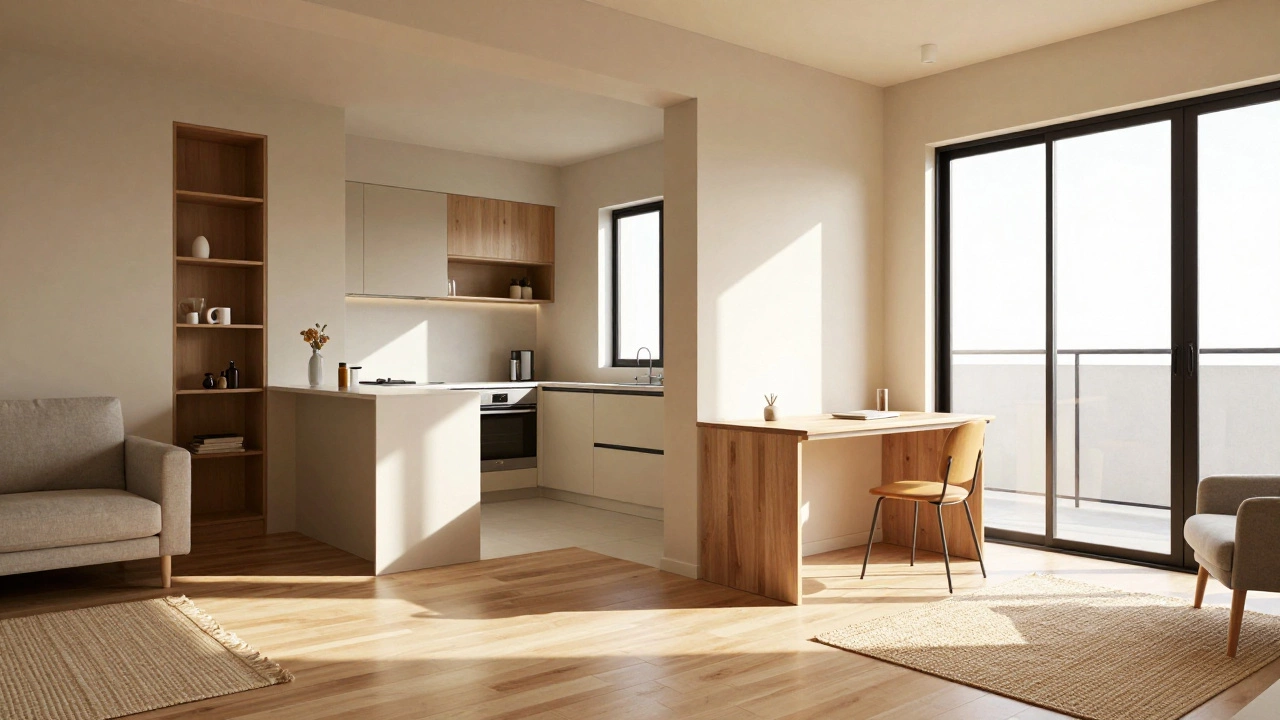
Apartment Size Suitability Calculator
Not all square footage is created equal. Use this tool to determine if an apartment fits your life based on location norms, occupancy rules, and remote work needs.
The Verdict
You’ve seen the listing. It says “spacious two-bedroom,” but you’re left wondering: spacious for whom? Is it enough room for a home office and a guest bed, or will you be fighting over the hallway every morning? The truth is, there is no single number that defines a two-bedroom apartment. A 2 bedroom apartment in downtown Manhattan looks nothing like one in Austin, Texas, or even a standard unit in Mumbai.
The confusion stems from how we measure space and what we expect from modern living. In some markets, a two-bedroom might mean 700 square feet of tight efficiency; in others, it’s a sprawling 1,200-square-foot family starter home. Understanding these differences isn’t just about curiosity-it’s about budgeting your life correctly. If you buy or rent based on the wrong size expectation, you’ll either pay for air you don’t need or live in a box that feels like a closet.
Before we break down the numbers by city, let’s talk about why this matters so much right now. With remote work becoming permanent for many, the definition of “living area” has shifted. You aren’t just looking for a place to sleep; you’re looking for a place to exist. This shift has pushed developers to rethink layouts, often sacrificing sheer square footage for better flow and natural light. For those who travel frequently or work in international hubs, understanding local spatial norms is crucial. Whether you are looking for long-term housing or short-term stays in global cities, knowing the baseline helps you avoid scams and poor fits. For instance, if you are navigating complex rental markets abroad, resources like this directory can help verify listings and understand local availability, ensuring you aren't caught off guard by regional quirks in accommodation standards.
The National Average: What Does the Data Say?
In the United States, the national average for a two-bedroom apartment hovers between 900 and 1,100 square feet. However, averages are dangerous things. They mask the extremes. A median is often more useful here. According to recent data from the Census Bureau and private real estate analytics firms, the median size sits closer to 950 square feet.
This number includes everything: bedrooms, bathrooms, kitchen, living room, closets, and hallways. It does not include balconies or parking spaces, which are often listed separately as “bonus” features. When you see a listing for 850 square feet, you are likely getting a compact, efficient layout. When you see 1,200 square feet, you are entering luxury territory in most urban centers.
Why does this range exist? It comes down to three factors: location, age of building, and local zoning laws. Older buildings in dense cities were constructed when families lived differently-often with smaller kitchens and larger dining areas. Newer constructions prioritize open-concept living rooms and minimal hallways to maximize usable floor space within strict height and setback restrictions.
City-by-City Breakdown: Geography Dictates Square Footage
If you move across the country, the size of your two-bedroom changes dramatically. Here is how major markets compare:
- New York City: Expect 600-800 square feet. In NYC, a two-bedroom is a luxury item. Many pre-war walk-ups have tiny bedrooms (sometimes called “closets”) but high ceilings and charm. Modern high-rises might offer 900+ square feet, but at a premium price per foot.
- San Francisco: Similar to NYC, ranging from 700-900 square feet. Space is at a premium due to geographic constraints and high demand.
- Chicago: More reasonable, averaging 850-1,000 square feet. Chicago offers better value for space than coastal cities.
- Austin & Denver: These growing tech hubs average 950-1,100 square feet. New developments here often include larger units to attract young professionals.
- Atlanta & Dallas: True suburban sprawl meets urban density. Two-bedrooms here can easily exceed 1,100-1,300 square feet, often including den space or laundry rooms inside the unit.
Notice the trend: the further you get from the coasts and the older the city’s infrastructure, the more space you get for your money. But size isn’t everything. A 700-square-foot apartment with great light and storage can feel larger than a 1,000-square-foot dark box.
Layout Matters More Than Total Square Footage
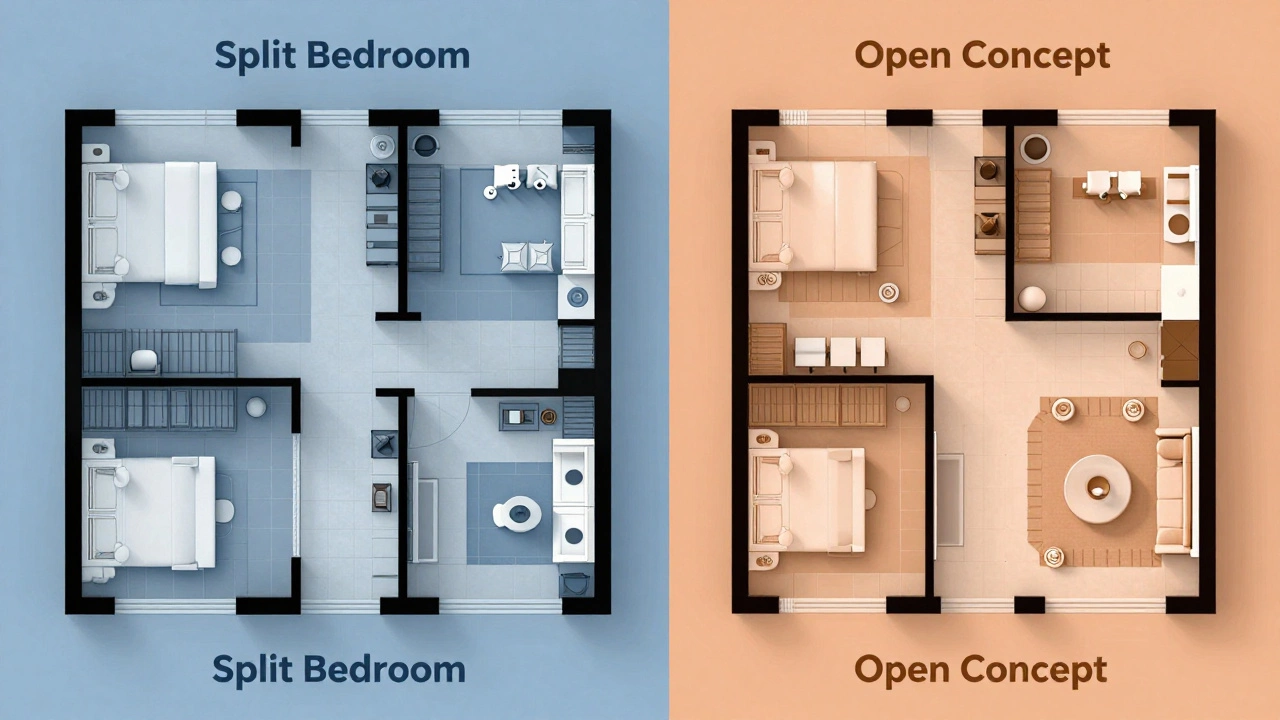
You can have two identical 900-square-foot apartments, but one feels huge while the other feels cramped. Why? Layout efficiency. Let’s look at common configurations:
| Layout Type | Average Size | Pros | Cons |
|---|---|---|---|
| Split Bedroom | 850-1,000 sq ft | Privacy, quiet master suite | Smaller living area, longer hallways |
| Open Concept | 800-950 sq ft | Spacious feel, social flow | No privacy, noise travels |
| Stacked/Vertical | 700-850 sq ft | Efficient use of small footprint | Limited natural light, clutter risk |
Split Bedrooms: This is the classic layout where the bedrooms are on opposite sides of the living area. It’s ideal for couples who want separate spaces or for sharing with a roommate. The downside? Hallways eat up square footage. You might lose 50-100 square feet just to circulation space.
Open Concept: Popular in new builds, this removes walls between the kitchen, dining, and living areas. It makes a small apartment feel twice its size because sightlines extend further. However, it offers zero acoustic privacy. If your partner snores, you’ll hear it. If you cook fish, everyone smells it.
Stacked or Vertical: Common in ultra-dense cities, these units stack functions vertically. You might have a loft bedroom or a sunken living room. They save horizontal space but can feel claustrophobic if not designed well.
What Counts as a “Bedroom”? Legal Definitions vs. Reality
Here’s a trap many renters fall into: assuming any room with a door is a bedroom. Legally, a bedroom must meet specific criteria. If a unit doesn’t meet them, it’s not a two-bedroom-it’s a one-bedroom with a den, study, or bonus room.
To qualify as a bedroom, a room typically needs:
- Minimum Size: Usually at least 70 square feet (e.g., 7x10 feet). Some jurisdictions require more.
- Natural Light: A window that opens to the outside. Closets and interior rooms don’t count.
- Emergency Egress: A way out in case of fire. This usually means a window large enough for a person to climb through, or direct access to an exterior door.
- Heating/Cooling: Access to climate control systems.
If a listing calls a 5x5 closet a “second bedroom,” run away. It’s misleading marketing. Always ask for floor plans. Floor plans lie less than photos do.
International Context: How Other Countries Measure Up
If you’re comparing U.S. sizes to other parts of the world, remember that metric measurements change the perception. In Europe, a two-bedroom apartment (often called a 2-room or 3-room depending on whether they count the living room) might be 60-80 square meters. That’s roughly 650-860 square feet. Smaller than the U.S. average, yes, but European units often have higher-quality finishes, better insulation, and more built-in storage.
In Asia, particularly in countries like India or Japan, space is even tighter. A 2BHK (2 Bedroom, Hall, Kitchen) in Mumbai might range from 600 to 900 square feet. In Tokyo, micro-apartments redefine “two-bedroom” with fold-out beds and multi-functional furniture. The key takeaway? Don’t judge size by absolute numbers alone. Judge it by utility. Does the space serve your lifestyle?
Hidden Spaces: Storage, Balconies, and Amenities
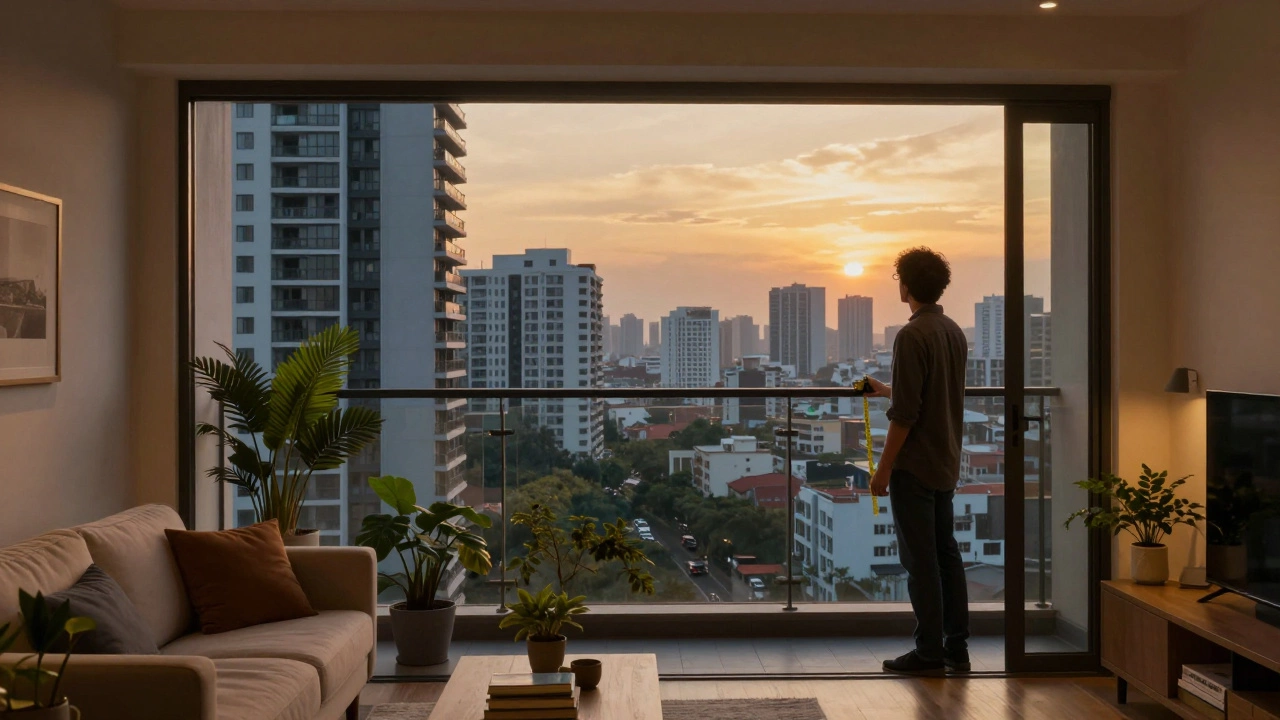
When evaluating size, look beyond the interior walls. Where is the storage? In many older buildings, closets are generous. In newer condos, you might get a single coat closet and a linen cupboard. If you own more than five pairs of shoes, this matters.
Balconies and terraces are often excluded from the square footage calculation. A 900-square-foot apartment with a 100-square-foot balcony effectively gives you 1,000 square feet of usable space if you spend time outdoors. In warm climates, this outdoor space becomes an extension of the living room.
Amenities also offset small interiors. If the building has a gym, pool, lounge, and co-working space, you don’t need a massive home office or exercise room. You’re paying for community space instead of private square footage. Ask yourself: Do I prefer my own space, or shared luxury?
Future-Proofing Your Space
Your needs today won’t match your needs in five years. Will you have kids? Will you work from home permanently? Will you host guests? A tight two-bedroom might work for a single professional, but it could suffocate a growing family.
Consider flexibility. Can the second bedroom double as a home office? Is there room for a desk without blocking traffic flow? Can the living area accommodate a sofa bed for visitors? Look for adaptable layouts. Avoid units with fixed partitions that limit reconfiguration.
Also, think about resale or subletting potential. Two-bedroom units are highly desirable for young couples and small families. If you buy, ensure the unit appeals to future buyers. Unique layouts can alienate potential purchasers. Stick to proven designs unless you plan to stay forever.
Conclusion: Size Is Relative, Comfort Is Absolute
So, how big are most two-bedroom apartments? On average, 900-1,100 square feet in the U.S., with significant variation by city. But the number is less important than the fit. A well-designed 800-square-foot apartment beats a poorly laid-out 1,200-square-foot one every time. Prioritize layout efficiency, legal bedroom definitions, and hidden storage. Measure twice, rent once.
What is the minimum size for a 2-bedroom apartment?
Legally, there is no federal minimum, but most cities require each bedroom to be at least 70 square feet. Therefore, a theoretical minimum would be around 400-500 square feet plus living/kitchen/bath space, totaling roughly 600-700 square feet. However, anything under 750 square feet is considered very compact and may lack comfort.
Is a 900-square-foot apartment considered big?
In major metropolitan areas like New York or San Francisco, 900 square feet is considered spacious for a two-bedroom. In suburban or rural areas, it might be considered average or even small. Context matters. For a couple, it’s comfortable; for a family of four, it’s tight.
Does square footage include the balcony?
Typically, no. In most U.S. markets, square footage refers to interior conditioned space only. Balconies, patios, and garages are listed separately. Always confirm with the landlord or agent if outdoor space is included in the advertised number.
What is the difference between a 2-bedroom and a 1-bedroom + den?
A true 2-bedroom has two rooms meeting legal bedroom standards (window, egress, size). A 1-bedroom + den has one legal bedroom and a second room that lacks one or more requirements (e.g., no window). Dens are cheaper to rent/buy but harder to resell or sublet as full bedrooms.
How do I calculate if an apartment is too small for me?
Use the "per person" rule of thumb. Aim for at least 300-400 square feet per adult occupant for comfortable living. Add extra space for hobbies, pets, or home offices. If the total square footage divided by occupants is below 300, expect to feel crowded long-term.