Land Size Visualizer & Calculator
Enter the acreage of a potential villa or estate lot to visualize its physical footprint, perimeter, and maintenance implications.
Side Length
Perimeter
Diagonal Distance
Walk Perimeter Time
Common Comparisons
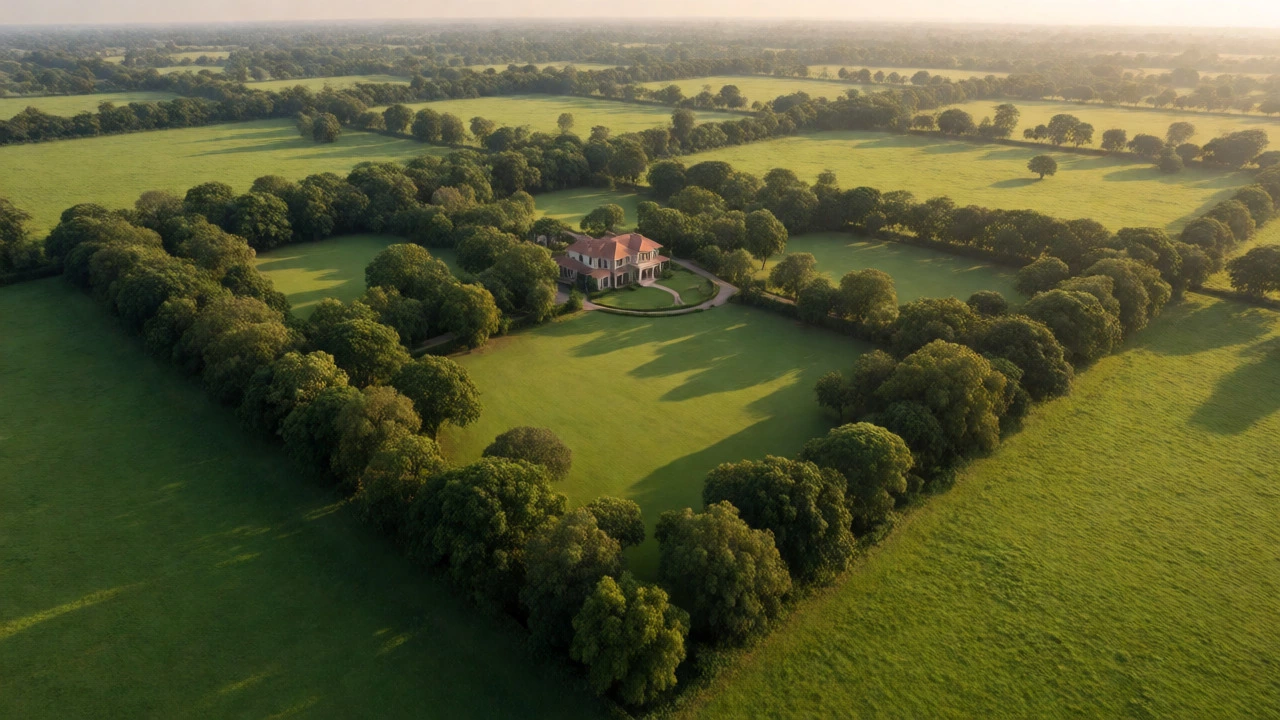
You are standing on a piece of dirt. The agent hands you a brochure that says "20-acre estate." You nod politely, but your brain is doing the math wrong. You are picturing a suburban backyard, maybe ten times bigger. But 20 acres isn't just "big." It is a specific geographic footprint that changes how you live, how you drive, and how much it costs to maintain. If you are looking at villas for sale with this kind of land, you need to stop thinking in abstract numbers and start visualizing distance.
Here is the hard truth: 20 acres does not have a single length in miles because it depends entirely on the shape of the plot. However, if we assume a standard square plot-which many rural estates approximate-the side length is roughly 0.56 miles. That means walking from one corner to the opposite corner diagonally covers about 0.79 miles. To put that in perspective, if you walk at a brisk pace, it takes you over 15 minutes just to cross the width of your own front yard. This isn't a garden; it's a small municipality.
The Math Behind the Mystery
Let’s strip away the real estate jargon. An acre is a unit of area, not length. One acre equals 43,560 square feet. So, 20 acres equals 871,200 square feet. Since there are 5,280 feet in a mile, we can convert this into something your legs understand.
If the land is a perfect square, each side measures the square root of 871,200. That number is approximately 933.4 feet. Divide that by 5,280, and you get 0.177 miles per side. Wait, did I say 0.56 earlier? Let me correct that calculation for clarity. A square mile contains 640 acres. Therefore, 20 acres is 20/640th of a square mile. That simplifies to 1/32nd of a square mile. The square root of 1/32 is approximately 0.177. So, a square 20-acre plot has sides that are about 0.18 miles long. Walking the perimeter would take you around 0.7 miles. Still, that is nearly three laps around a standard high school track just to circle your property boundary.
| Comparison Unit | Equivalent Area | Context for Buyers |
|---|---|---|
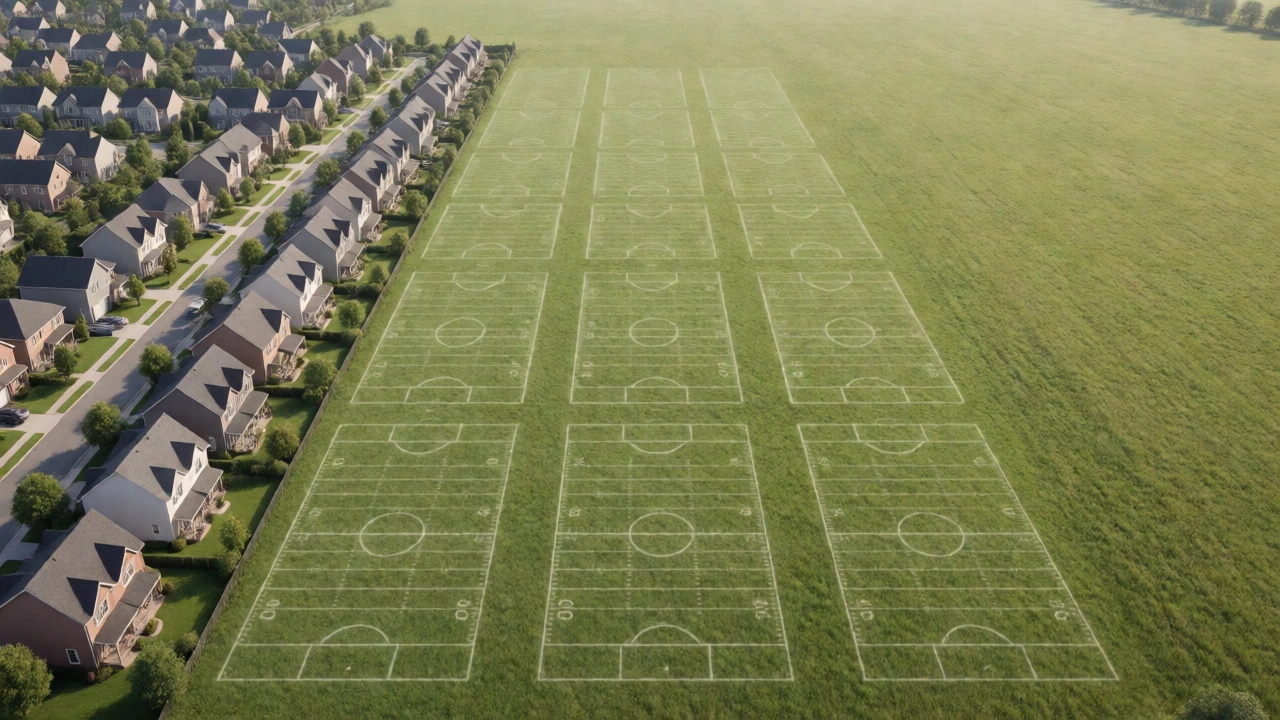
| Standard Football Field | ~1.32 acres (with end zones) | Your 20-acre plot fits about 15 football fields. |
| Central Park (NYC) | 843 acres | 20 acres is tiny compared to city parks, but huge for private ownership. |
| Walt Disney World Magic Kingdom | ~107 acres | Less than half the size of the main park, but enough for a massive estate. |
| Standard City Block | Varies (approx. 1-2 acres) | Imagine combining 10-20 city blocks into one private zone. |
Shape Matters More Than Size
Real estate rarely comes in perfect squares. You might find a long, narrow strip of land running along a river, or an irregular polygon tucked between hills. This drastically changes the "distance" experience. Imagine a rectangular plot that is 1,000 feet wide but 871 feet deep. That’s still 20 acres. But now, the distances feel different. If the plot is 2,000 feet wide and 435 feet deep, it feels like a long corridor rather than a spacious field.
Why should you care about the aspect ratio? Because it dictates privacy and utility. A square plot maximizes the distance from the house to the boundaries, giving you better sound insulation from neighbors. A long, thin plot might leave you exposed on two sides while hiding you on the others. When you look at Villas for Sale with large lots, always ask for the plat map. Don’t just look at the acreage number. Look at the dimensions. Can you build a tennis court? Yes, probably. Can you build a barn, a guest house, and a swimming pool without them feeling cramped? Only if the shape allows it.
Walking vs. Driving: The Time Cost
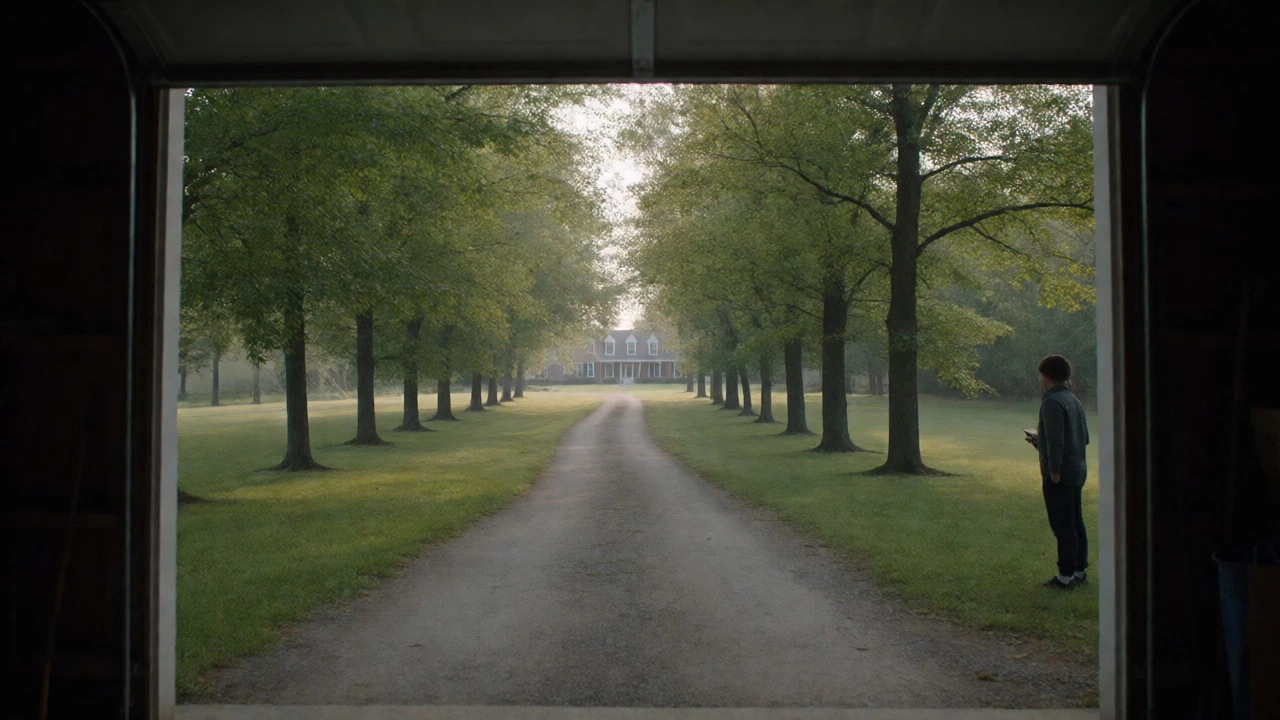
Living on 20 acres sounds romantic until you realize you left your phone in the kitchen and you’re currently in the detached garage. On a typical suburban lot, you walk five steps. On a 20-acre estate, you might need a vehicle just to check the mailbox. If the driveway winds through trees, the driving time from the road to the house could be 2-3 minutes. That doesn’t sound like much, but multiply that by four trips a day, and you lose significant time just navigating your own property.
Maintenance becomes a logistical challenge. Mowing 20 acres of grass requires a riding mower, not a push trimmer. If you hire landscapers, they charge by the hour or by the acre. Expect maintenance bills to be 10x higher than a standard villa. You aren’t just paying for the house; you’re paying for the labor required to keep 871,200 square feet of land tidy. If you plan to keep it wild, you’ll need to manage brush clearing, which brings its own set of headaches regarding local fire codes and zoning laws.
What Can You Actually Build?
Zoning laws vary wildly depending on where you live. In some areas, 20 acres is considered "agricultural," meaning you can’t subdivide it easily. In others, it’s "rural residential," allowing you to split it into four 5-acre parcels later. This flexibility is crucial for investment. If you buy a 20-acre parcel for $1 million, you might be able to sell off 10 acres later for $700k, effectively getting your home for free plus cash.
- Main Residence: A luxury villa typically occupies 0.5 to 1 acre including setbacks.
- Auxiliary Structures: Guest houses, barns, stables, or workshops can take up another 1-2 acres.
- Landscape Features: Ponds, orchards, and gardens consume space quickly. A single large pond can take 2 acres.
- Setbacks: Local laws often require buildings to be 50-100 feet from the road and property lines. This reduces your usable building envelope significantly.
With 20 acres, you have room for everything most people dream of: a vineyard, a helipad, a horse arena, and extensive landscaping. But remember, every structure adds complexity to insurance and taxes.
The Hidden Costs of Large Lots
Buying the land is just the entry fee. The ongoing costs scale with the acreage. Here is what catches buyers off guard:
- Taxes: Property tax assessments often include the value of the land improvements. Clearing land or adding driveways increases taxable value.
- Utilities: Running water, electricity, and internet across 20 acres costs thousands more than on a 1-acre lot. Trenching for pipes and cables is expensive.
- Security: Monitoring a perimeter that stretches nearly a mile requires cameras, motion sensors, or patrols. Intruders have plenty of places to hide.
- Insurance: Liability coverage rises because guests or workers can get hurt anywhere on the vast grounds.
Before signing, get quotes for utility installation and annual maintenance. Ask the seller for historical data on their heating bills and lawn care contracts. Real numbers beat optimistic estimates every time.
Is 20 Acres Right for You?
Ask yourself these questions honestly. Do you enjoy working outdoors? If you hate mowing lawns, 20 acres will become a prison. Do you want isolation? Then yes, the distance from neighbors provides peace. Do you have pets or livestock? Horses need space; dogs do not necessarily need 20 acres to be happy. A fenced 2-acre yard is often sufficient for a dog, whereas a horse needs several acres of pasture.
If you are buying a villa primarily for status, consider if the upkeep matches your lifestyle. Many owners of large estates eventually downsize because the burden of maintenance outweighs the joy of ownership. Conversely, if you are a hobbyist farmer or a nature lover, this size offers the perfect balance-large enough to feel remote, small enough to manage personally.
How many football fields fit in 20 acres?
A standard American football field including end zones is about 1.32 acres. Therefore, 20 acres can fit approximately 15 football fields placed side-by-side.
Can I subdivide a 20-acre lot?
It depends on local zoning laws. Many rural areas allow subdivision into 5-acre minimums, meaning you could potentially create four separate lots. Always check with the local planning department before purchasing.
Is 20 acres considered a farm?
Legally, definitions vary by state and country. Generally, 20 acres is too small for commercial row-crop farming but ideal for hobby farms, horse properties, or orchards.
How long does it take to walk around 20 acres?
If the plot is square, the perimeter is about 0.7 miles. At a moderate walking pace of 3 mph, it would take roughly 14 minutes to walk the entire boundary line once.
Do I need a tractor for 20 acres?
Not strictly necessary, but highly recommended. Maintaining 20 acres of open land with manual tools is extremely labor-intensive. A compact tractor or zero-turn mower saves hours of work weekly.