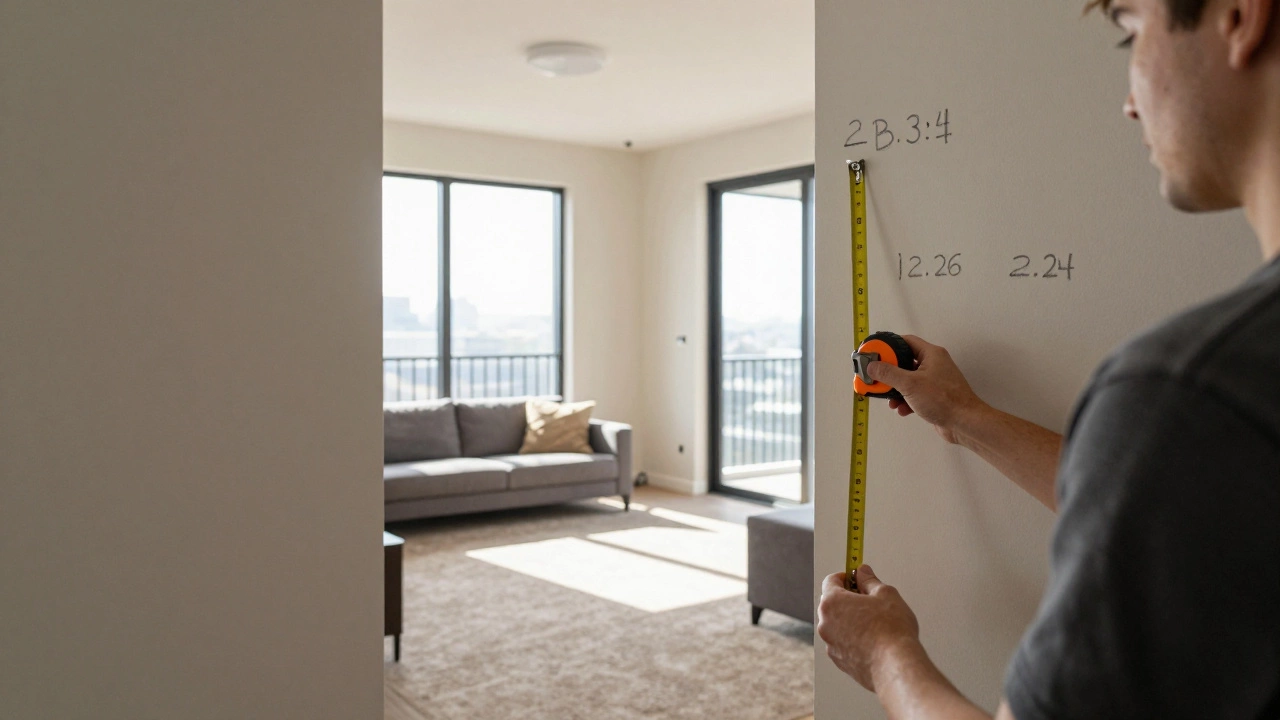
2BHK Square Footage Calculator
How to Measure Your Apartment
Follow these steps for accurate measurements:
- Measure from wall to wall, inside edge to inside edge
- Don't include skirting boards, door frames, or structural elements
- Measure each room separately (living room, bedrooms, kitchen, etc.)
- Exclude balconies, hallways, and laundry rooms from total usable space
Your Actual Usable Space
Total Net Usable Area: m²
Advertised Size: m²
Difference: m²
Percentage Difference:
A difference of 5% or more may indicate misleading measurements
Important: The difference between your measured area and advertised size is significant. Consider asking for a rent reduction or verifying with the landlord.
When you’re renting a 2BHK apartment, the listing says 85 square meters. But when you move in, it feels smaller. That’s not your imagination. Landlords don’t always measure the same way-and in some cases, they’re not even required to follow strict rules. In Melbourne, where rental demand is high and space is tight, knowing how square footage is calculated can save you from overpaying for less space than you think.
What’s Actually Included in the Square Footage?
There’s no single national law in Australia that says exactly what counts as living space. That means landlords can choose what to include-and what to leave out. Most follow the Australian Standard AS/NZS 3600:2021, which is the closest thing to a rulebook. Under this standard, only enclosed, habitable areas count. That means:
- Living room
- Kitchen
- Bedrooms
- Dining area
- Study nooks that are fully enclosed
But here’s what’s usually excluded:
- Balconies and terraces
- Laundry rooms (unless they’re enclosed and heated)
- Garages or carports
- Walk-in closets (sometimes included, sometimes not)
- Staircases and hallways
- Walls and structural elements
Some landlords will add balconies or even storage cupboards to make the number look bigger. A 2BHK listed as 90 m² might actually be 78 m² of usable space if you strip out the extras. Always ask: “What’s included in this measurement?”
How Do Landlords Measure It?
Most landlords don’t measure the apartment themselves. They copy the number from the original developer’s floor plan-which might have been measured decades ago. Developers often use a different standard than renters expect. They might include wall thickness or measure from the outside of the building, not the inside. That’s called gross floor area and it’s usually 5-10% larger than the net usable area you actually live in.
Here’s what a typical 2BHK apartment looks like when measured properly:
| Room | Average Size (m²) | Notes |
|---|---|---|
| Master Bedroom | 12-15 | Usually fits a queen bed, wardrobe, and small dresser |
| Second Bedroom | 9-12 | Good for a single bed or twin beds; often used as home office |
| Living Room | 18-22 | Space for sofa, TV, and dining area |
| Kitchen | 8-10 | Typically L-shaped or galley style |
| Bathroom | 5-7 | Includes shower, toilet, vanity |
| Laundry | 2-4 | Often not counted in total square footage |
| Total (Net Usable) | 54-70 | Real living space |
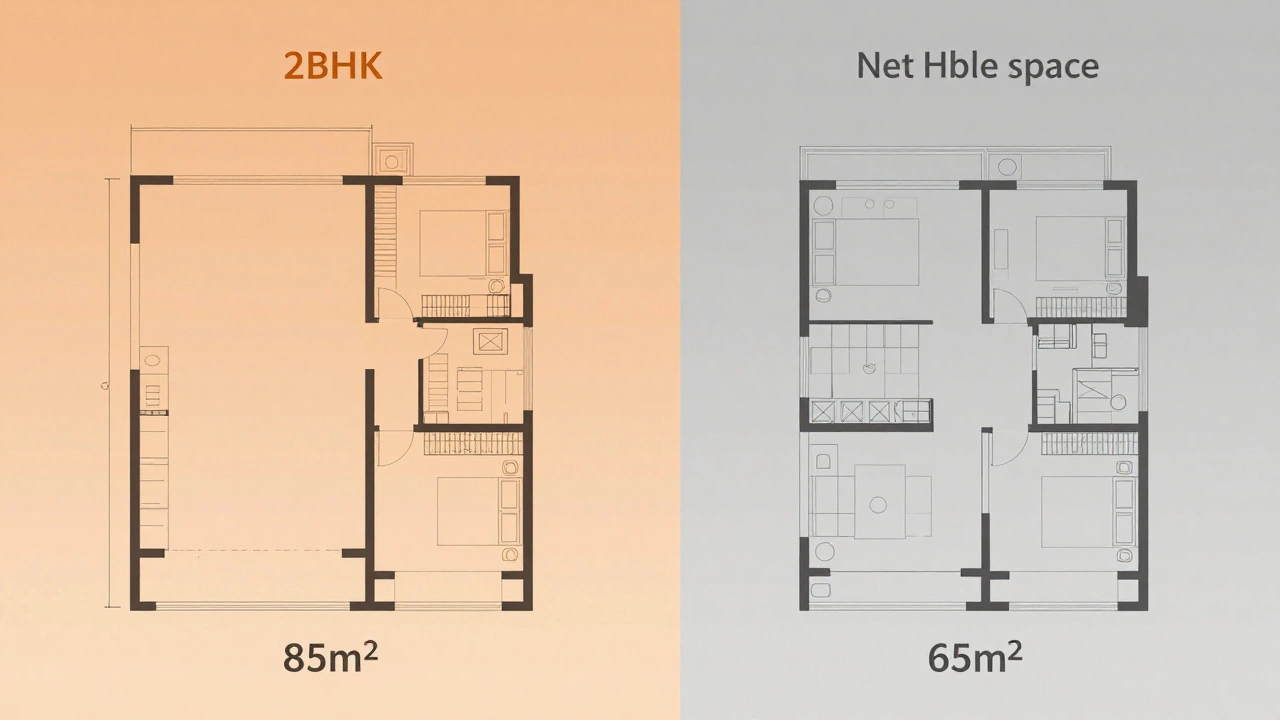
So if a landlord says their 2BHK is 85 m², but the net usable space is only 65 m², that’s a 23% difference. That’s like paying rent for a room you can’t use.
Why Does This Matter for Renters?
It matters because rent is often priced per square meter. In Melbourne, the average rent for a 2BHK is around $550-$700 per week. If you’re paying $650 for a 70 m² apartment, that’s $9.29 per m². But if the actual usable space is only 55 m², you’re really paying $11.82 per m²-almost 27% more than you think.
Landlords who inflate measurements can charge higher rent without offering more space. Tenants end up paying more for less. In 2024, the Victorian Civil and Administrative Tribunal (VCAT) handled over 1,200 disputes related to misleading property descriptions. Many were about square footage.
There’s no legal penalty in Victoria for misstating square footage-yet. But if you can prove the space is significantly smaller than advertised, you can ask for a rent reduction. Some tenants have successfully negotiated lower rent after measuring the apartment themselves.
How to Check the Measurement Yourself
You don’t need a professional to verify the size. Here’s how to do it in under 30 minutes:
- Grab a tape measure (or use a phone app like Google Measure or MeasureKit).
- Start in the living room. Measure from wall to wall, inside edge to inside edge. Don’t include skirting boards or door frames.
- Do the same for each bedroom, kitchen, and bathroom.
- Add up all the numbers. Ignore hallways, balconies, and storage areas unless they’re enclosed and heated.
- Compare your total to the landlord’s number. If yours is 10% or more smaller, you have grounds to ask questions.
Take photos of your measurements. Write down the dimensions. If you’re serious about negotiating rent or disputing the listing, this becomes your evidence.
What the Law Actually Says
In Victoria, the Residential Tenancies Act 1997 doesn’t require landlords to state exact square footage. But it does say that any information in a rental advertisement must be “not misleading or deceptive.” That’s the key.
If a landlord says “85 m²” and you prove it’s 70 m², you could argue the listing is misleading. You can take this to Consumer Affairs Victoria or file a complaint with VCAT. They don’t automatically reduce rent, but they’ve ordered rent reductions in cases where tenants proved the space was substantially misrepresented.
Other states like NSW and Queensland have similar rules. Even though square footage isn’t mandatory, the law protects you from false advertising.
Red Flags to Watch For
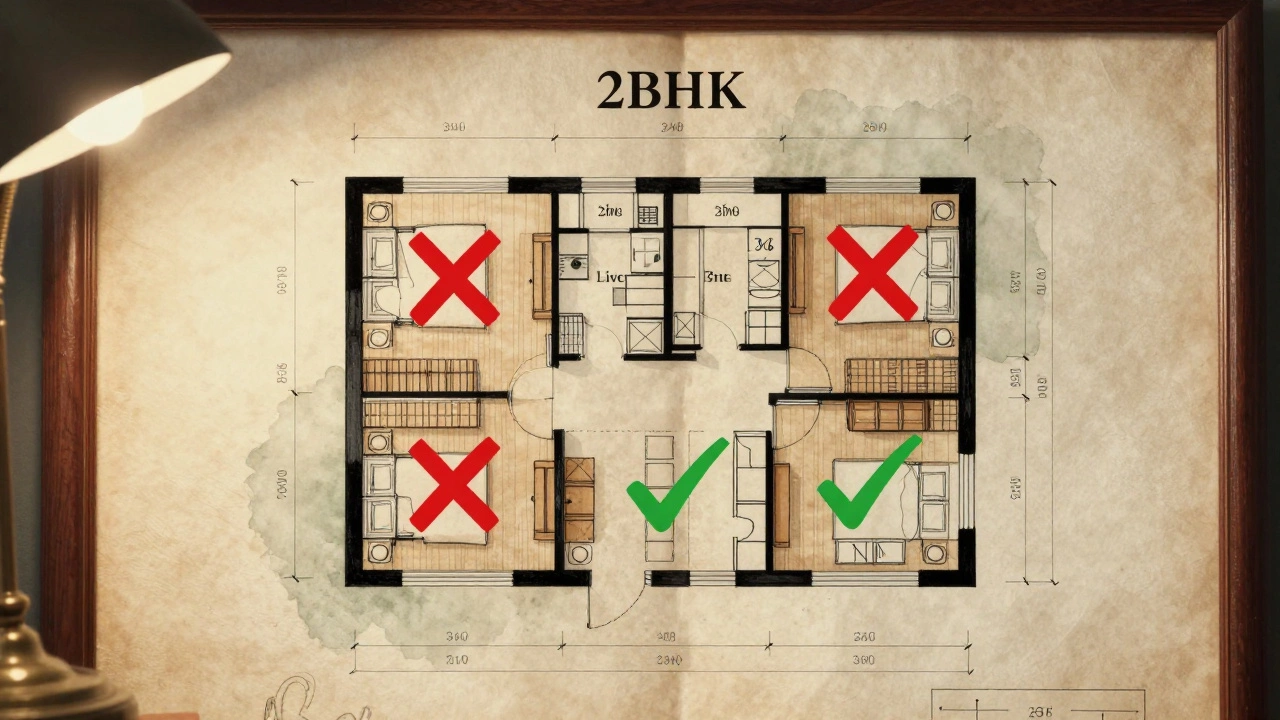
Here are signs a landlord might be inflating the square footage:
- The listing says “85 m² including balcony” - balconies aren’t living space.
- The floor plan shows thick walls, but the total is unusually high for a 2BHK.
- The apartment feels cramped even though the number looks big.
- The landlord refuses to let you measure the space before signing.
- The building is older (built before 2000) and the measurement hasn’t been updated.
Older buildings often have irregular layouts. Walls might be thicker. Ceilings might be sloped. These things eat into usable space. A 2BHK from the 1980s listed as 80 m² might only have 60 m² of flat, walkable floor.
What You Can Do Next
If you’re looking for a 2BHK:
- Always ask: “Can I see the original floor plan?”
- Request a copy of the strata plan (if it’s a unit complex). It often shows accurate internal measurements.
- Visit the apartment at different times of day. Morning light shows how much space you actually have.
- Bring a friend who’s good at visualizing space. They’ll notice if the kitchen feels squeezed or the living room is too narrow.
- If the rent seems high for the size, don’t be afraid to walk away.
There’s no shortage of 2BHK apartments in Melbourne. You don’t need to settle for a misleading listing. A 65 m² apartment with honest measurements is better than an 80 m² one that’s mostly walls and balconies.
Frequently Asked Questions
Is it legal for landlords to include balconies in square footage?
Yes, it’s not illegal-but it’s misleading. Balconies aren’t habitable space under Australian standards. Landlords can list them separately, but if they’re added to the total square footage without clarification, it could be considered deceptive advertising under the Australian Consumer Law.
Can I demand a rent reduction if the apartment is smaller than advertised?
You can ask. If you have measurements proving the space is 10% or more smaller, you can file a complaint with Consumer Affairs Victoria. Some tenants have successfully negotiated rent reductions or lease termination without penalty. Document everything and stay calm.
Do all real estate agents measure apartments the same way?
No. Some follow AS/NZS 3600. Others use developer specs or guess. There’s no enforcement. That’s why it’s up to you to verify. Ask the agent: “Which standard are you using to measure?” If they don’t know, be cautious.
Why do developers measure differently than renters?
Developers use gross floor area to make buildings look bigger for marketing. This includes walls, external cladding, and sometimes common areas. Renters care about net usable area-the space you actually walk on. The difference can be 5-15%.
Should I hire a professional to measure the apartment?
Only if you’re signing a long-term lease and the rent is high. For most renters, a tape measure and 30 minutes is enough. Professionals charge $150-$300, which rarely pays off unless you’re disputing a $1,000+ per week rent.