Land Price Estimator
Estimate Your Land Cost
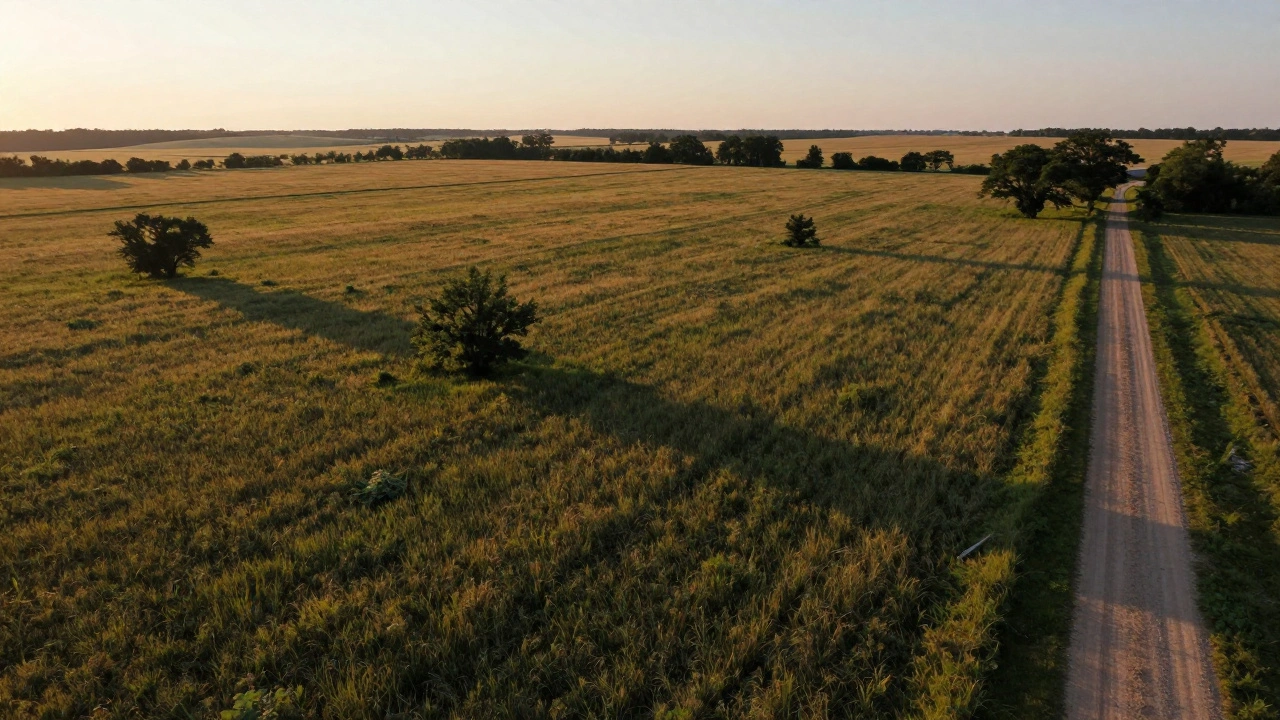
Buying one acre of land isn’t like buying a car or a phone. There’s no sticker price. No online calculator that gives you a firm number. The cost of one acre can swing from $5,000 to over $2 million - and everything in between. It depends on where you are, what you plan to do with it, and who’s selling. If you’re thinking about buying land, you need to know what really drives the price - not just what you see on a listing.
Location is everything - and it’s not just about the state
Acre for acre, land in rural Montana costs a fraction of what land in suburban Austin does. But even within the same state, prices can vary wildly. In Texas, an acre near Houston might sell for $8,000. An acre 30 miles out in the countryside? Maybe $2,500. Meanwhile, an acre just outside of San Francisco can easily hit $500,000 - even if it’s covered in brush and has no road access.
The biggest factor? Proximity to cities. Land within 10 miles of a metro area with 100,000+ people usually costs at least 5x more than land 50 miles out. Why? Because people want to live close to jobs, schools, and stores. Developers buy up that land for housing. Investors snap it up hoping to flip it later. And that competition pushes prices up.
But location isn’t just about distance. It’s about access. An acre with a paved road, electricity, and a well already drilled can cost 3x more than a similar plot that’s only reachable by a dirt trail and needs a septic system installed. You’re not just paying for the ground - you’re paying for the infrastructure that makes it usable.
Land use zoning changes everything
Two identical plots of land right next to each other can have wildly different values - because of zoning. One might be zoned for single-family homes. The other might be restricted to agricultural use only. The first could sell for $300,000. The second? $40,000.
Residential zoning allows you to build a house. Commercial zoning lets you open a store or a small business. Agricultural zoning limits you to farming or ranching. Some areas even have conservation zoning, where you can’t build anything at all. That land might be cheap, but you can’t develop it. And if you want to change the zoning, you’re looking at months - maybe years - of paperwork, hearings, and fees.
Before you buy, check the local zoning laws. Talk to the county planning office. Ask: Can I build a house here? Can I put up a shed? Can I rent it out as a tiny home? If the answer is no - or unclear - walk away. A cheap plot with no buildable rights is just expensive dirt.
Soil, water, and terrain - the hidden costs
Land that looks flat and green might be a nightmare to build on. Clay soil expands when wet and cracks when dry. That’s bad for foundations. Rocky land means expensive excavation. Wetlands? You can’t build on them without permits - and even then, you might only be allowed a small footprint.
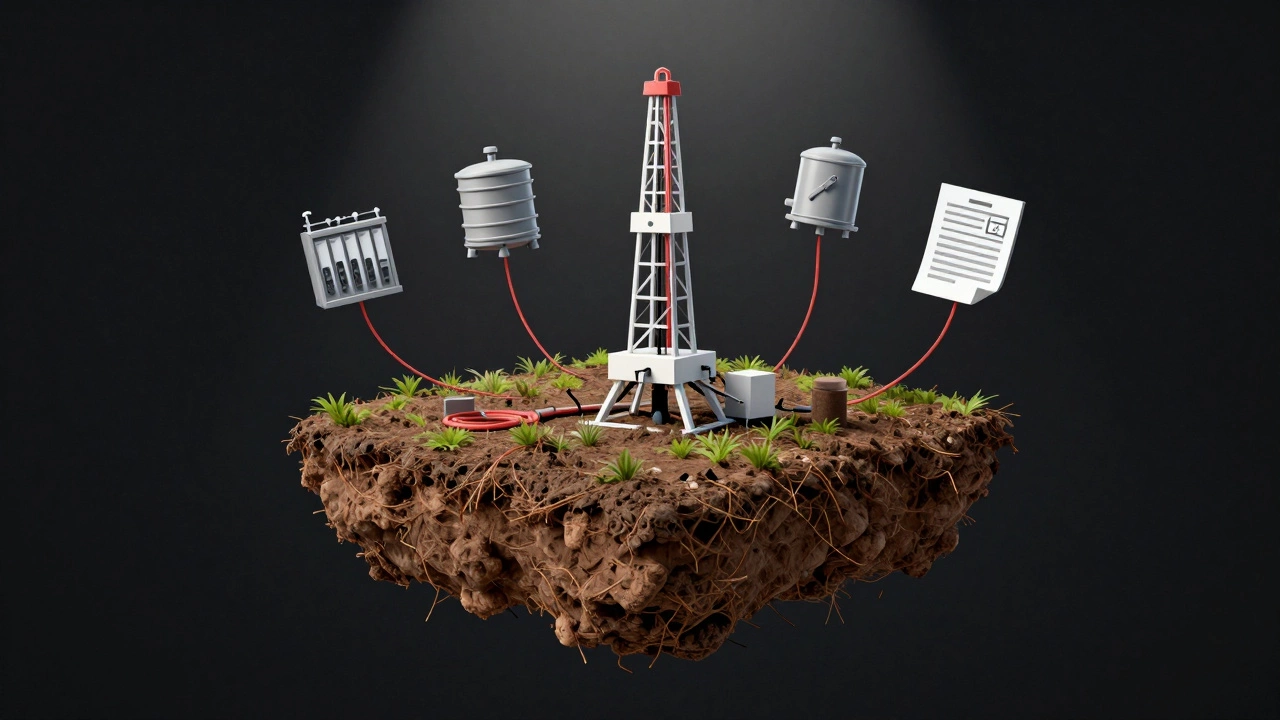
Water access is another silent price driver. If the land has a natural spring or a well that’s already producing clean water, that’s a huge plus. If you have to drill a 300-foot well, expect to pay $10,000-$25,000. And if the water table is too low? You might not get water at all.
Soil tests cost $300-$800. Surveying the land runs $500-$2,000. A perc test for septic systems? Another $500-$1,500. These aren’t optional. Skipping them is like buying a car without checking the engine. You might think you’re saving money - until you’re stuck with a $50,000 repair bill.
Taxes and fees - what nobody tells you
Land taxes vary by county. In some places, rural land is taxed at a low rate because it’s used for farming. In others, even unused land is taxed like it’s worth a mansion. In Georgia, a 1-acre wooded lot might cost $200/year in taxes. In New Jersey, the same size plot could be $4,000.
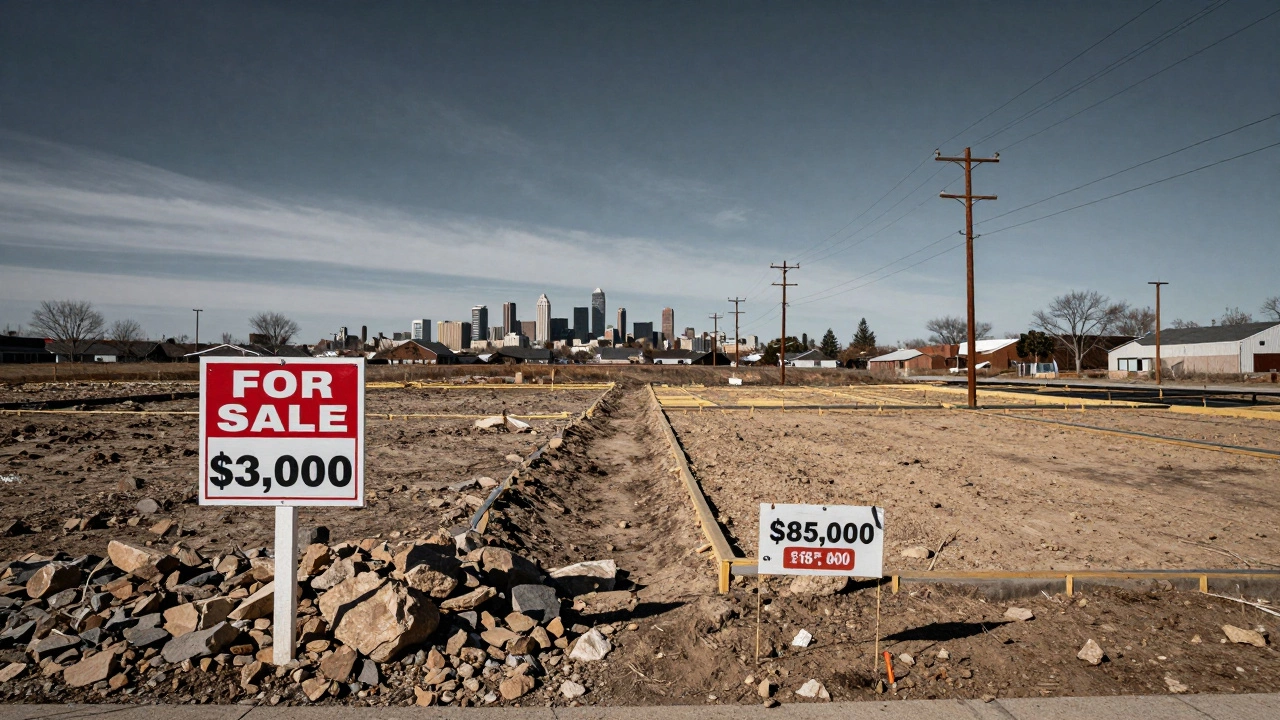
Then there are fees. Some counties charge impact fees if you plan to build - $5,000 to $20,000 just to connect to water or sewer lines. Others charge for subdivision permits, environmental reviews, or even tree removal. These aren’t listed on the MLS. You have to dig for them.
Don’t assume the asking price is the total cost. Add 10-20% for hidden fees, taxes, and inspections. If you’re planning to build, budget at least 30% extra for site prep and utilities.
Who’s selling - and why?
Land sold by a family who’s inherited it? Often priced low. They just want to get rid of it. Land sold by a developer who’s holding it for future growth? Priced high - they’re betting on future demand. Land sold by a bank after foreclosure? Could be a steal - or a trap.
Foreclosed land is often sold "as-is" with no disclosures. Maybe there’s an old oil tank buried under the trees. Maybe there’s an easement letting a neighbor drive across your property. Maybe the title is clouded. Always get a title search. It costs $500-$1,200 - but it could save you from a lawsuit later.
Working with a local real estate agent who specializes in land helps. They know who’s selling, why, and what’s really going on. A generic agent who only sells houses won’t know the difference between a buildable lot and a wetland.
What’s the average cost of 1 acre in 2025?
There’s no single number. But here’s what you can expect in the U.S. right now:
- Rural, undeveloped land (Midwest, South): $2,000-$8,000 per acre
- Suburban fringe (near cities, buildable): $20,000-$100,000 per acre
- High-demand metro areas (California, New York, Florida): $100,000-$500,000+ per acre
- Waterfront or premium views (lakes, mountains): $250,000-$2 million+
These aren’t guesses. They’re based on 2025 USDA land value surveys, county assessor records, and real estate data from LandWatch and Zillow Land. Prices have risen 12-18% since 2023 in most markets due to inflation, remote work trends, and increased demand for self-sufficiency.
Is buying land a good investment?
It can be - if you’re patient. Land doesn’t generate income like a rental property. It doesn’t appreciate fast like a house in a hot market. But over 10-20 years, land in growing areas has consistently outperformed stocks in some regions.
Look at Texas. In 2015, an acre near the edge of Austin sold for $15,000. By 2025, that same acre was worth $220,000. Why? Because the city grew outward. People moved out. Developers followed.
But don’t buy land hoping to flip it next year. The market moves slow. You need to hold it. You need to pay taxes. You need to wait for the right buyer. If you need cash flow, buy a rental. If you want long-term growth, land is a quiet, steady bet.
What to do before you sign anything
If you’re serious about buying an acre, here’s your checklist:
- Check zoning - call the county planning office. Get it in writing.
- Run a title search - make sure there are no liens or easements.
- Get a survey - confirm boundaries. Don’t trust a map.
- Test the soil and water - especially if you plan to build.
- Ask about utilities - is there power? Water? Sewer? Or will you pay to bring them in?
- Visit at different times of year - check for flooding, erosion, or wildlife issues.
- Talk to neighbors - they’ll tell you what the county won’t.
Land is the one thing you can’t move. Once you buy it, you’re stuck with it. Don’t rush. Don’t fall for a "great deal" that turns out to be a money pit. Do your homework - or pay the price later.
Final thought: Land isn’t just a purchase - it’s a commitment
Buying land means you’re betting on the future. You’re betting that roads will come. That water will flow. That your neighbors won’t turn into a landfill. That the rules won’t change.
It’s not for everyone. But if you want to build your own home, grow your own food, or own something that won’t disappear in a market crash - then land might be the smartest investment you’ll ever make. Just make sure you know exactly what you’re buying - and why.
How much does 1 acre of land cost on average in the U.S.?
There’s no national average because land prices vary so much. Rural land can cost as little as $2,000 per acre, while land near major cities can cost over $500,000. Most buyers pay between $10,000 and $100,000 per acre depending on location and buildability.
Can I build a house on any acre of land I buy?
No. Zoning laws control what you can build. Some land is restricted to farming, conservation, or commercial use only. Always check with the county planning department before buying. Even if the land looks empty, it might be illegal to put a house on it.
What hidden costs come with buying land?
Hidden costs include property taxes, surveying, soil testing, well drilling, septic installation, utility hookups, and impact fees. These can add $10,000 to $50,000+ to your total cost. Always budget 20-30% extra beyond the purchase price.
Is buying land better than buying a house?
It depends on your goals. Land is cheaper upfront and offers freedom to build however you want. But it takes time, money, and patience to develop. A house is move-in ready but gives you less control. Land is a long-term investment. A house is a short-term one.
What’s the best way to find land for sale?
Use specialized sites like LandWatch, Zillow Land, or Realtor.com’s land filter. Work with a local land agent - not a general realtor. Visit the property in person. Talk to neighbors. Check county records for zoning and past sales. Don’t rely on photos or listings alone.