
$2,000 Monthly Budget Home Affordability Calculator
Your Financial Parameters
Estimated Buying Power
Maximum Home Price You Can Afford
Based on a monthly limit of $2,000
Monthly Payment Breakdown (PITI)
Market Reality Check
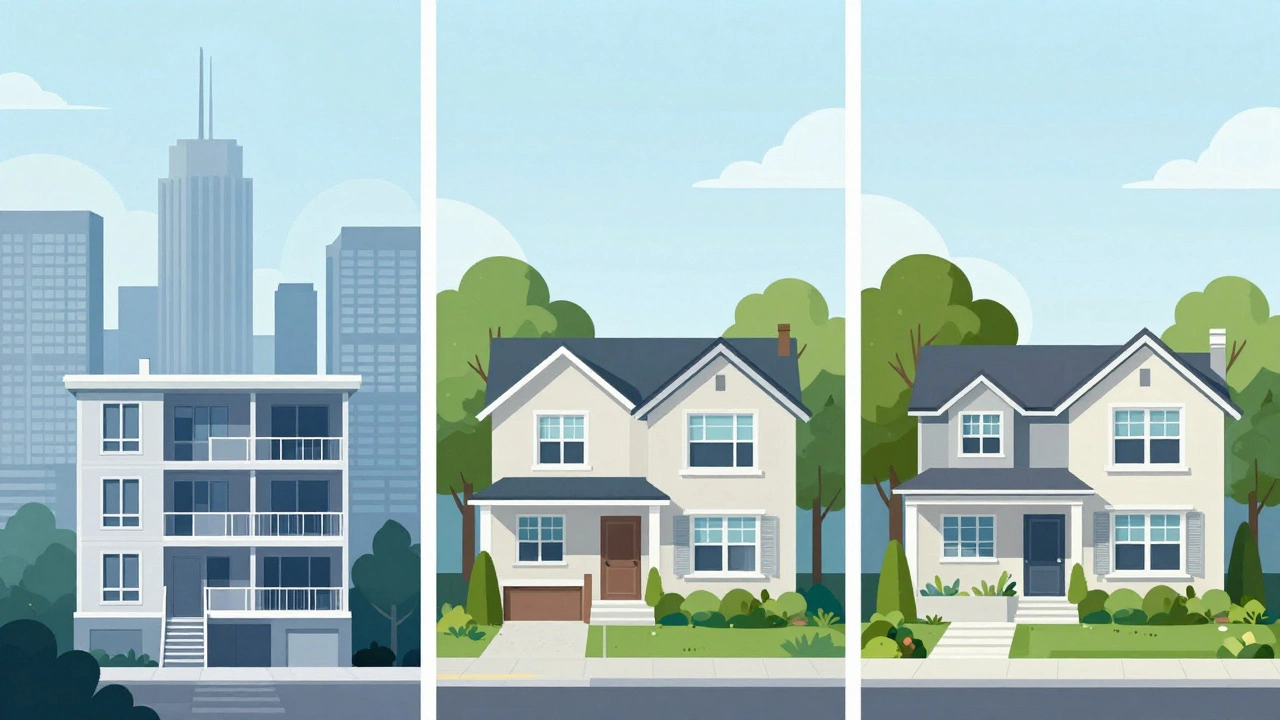
With this budget, you are likely looking at entry-level apartments in major metros or townhouses in mid-tier suburbs. In regional areas, you might find a small family home.
You set your monthly budget to $2000. You look at listings. The numbers don't add up. In many major cities, that payment barely covers interest on a tiny condo, let alone a family home. But here is the truth: you can still buy a house with a $2000 monthly limit. It just requires looking in the right places and understanding how banks calculate what you can afford.
As of mid-2026, interest rates have stabilized compared to the volatile years of 2023 and 2024. This stability changes the math. If you are trying to figure out if your paycheck can stretch to cover a roof over your head, you need to look beyond the headline price tag. You need to understand the serviceability rules, the hidden costs, and the geographic arbitrage available to buyers today.
The Math Behind Your Monthly Payment
Before we talk about houses, we need to talk about loans. When you say you can pay $2000 a month, banks do not see that as a blank check. They see it as a ceiling for your total debt obligations. To find out how much house you can actually buy, we have to reverse-engineer the mortgage calculation.
A standard mortgage payment consists of principal (the loan amount) and interest. In 2026, average fixed-rate mortgages for a 30-year term hover around 5.5% to 6.5%, depending on your credit score and location. Let’s use a conservative estimate of 6% to keep things realistic.
If your entire $2000 goes toward the mortgage principal and interest (P&I), here is the rough breakdown:
- Loan Amount: Approximately $350,000 to $360,000
- Interest Rate: 6.0% fixed for 30 years
- Monthly Payment: $2,133 (slightly over budget)
To stay strictly under $2000 for P&I, your loan amount would likely need to be closer to $330,000. However, this is where most people get tripped up. Your $2000 limit usually includes more than just the bank loan.
You also have to account for property taxes, homeowners insurance, and potentially private mortgage insurance (PMI) if you put down less than 20%. These are often bundled into what lenders call PITI (Principal, Interest, Taxes, Insurance). If you live in an area with high property taxes, like parts of New Jersey or Illinois in the US, or high council rates in Australian suburbs, your actual loan capacity drops significantly. A $2000 total housing budget might only support a $280,000 loan once these extras are added.
What Does $300k-$350k Get You in 2026?
So, you have a purchasing power of roughly $300,000 to $350,000 for the loan portion. Add a down payment-let's assume you have saved 10% to 20%-and your total home purchase price range sits between $330,000 and $440,000. What does that buy you?
The answer depends entirely on where you live. Real estate is hyper-local. A dollar in Melbourne buys different square footage than a dollar in Sydney, London, or Toronto.
| Market Type | Property Type | Condition | Location Context |
|---|---|---|---|
| Major Metro City (e.g., Sydney, NYC, London) | Studio or 1-Bedroom Apartment | New Build or Older Unit | Outer suburbs or fringe areas |
| Mid-Tier City (e.g., Melbourne, Austin, Manchester) | 2-Bedroom Townhouse or Small House | Needs Cosmetic Updates | Suburbs 30-45 mins from CBD |
| Regional/Rural Area | 3-Bedroom Family Home | Moved-in Ready | Towns with population under 50,000 |
In expensive metro areas, a $2000 monthly commitment often restricts you to entry-level apartments. You might find a modern studio in a new development, but don't expect a backyard. In mid-tier cities, you can stretch further. You might find a townhouse or a smaller detached home in suburbs that are accessible by public transport but not within walking distance of the city center. In regional areas, your money works harder. You can often find a solid three-bedroom brick-and-mortar home with land, giving you space to grow and potential for future value appreciation.
The Down Payment Factor
Your monthly payment doesn't exist in a vacuum. It is tied directly to how much cash you have upfront. The size of your down payment dictates two things: your loan-to-value ratio (LVR) and whether you need PMI.
If you put down 20%, you avoid PMI. This saves you hundreds of dollars a month, effectively boosting your purchasing power. For a $350,000 home, a 20% down payment is $70,000. That is a significant barrier for many first-time buyers.
If you only have 5% or 10% down, your loan amount increases, which raises your monthly interest payments. Additionally, lenders will charge PMI until you build enough equity. This fee can range from 0.5% to 1% of the loan amount annually. On a $330,000 loan, that’s an extra $13 to $27 per month. While small, every dollar counts when you are capped at $2000.
Some government-backed programs, like FHA loans in the US or First Home Guarantee schemes in Australia, allow lower down payments (as low as 3.5%) but come with their own sets of fees and stricter eligibility criteria regarding income limits and property condition. These programs can help you enter the market sooner, but they require careful calculation to ensure the monthly costs fit your $2000 limit.
Hidden Costs That Eat Your Budget
Buying a house is not just about the mortgage. There are closing costs, maintenance reserves, and lifestyle adjustments. Many new buyers forget that owning a home means you are now the landlord, the plumber, and the gardener.
- Closing Costs: Typically 2% to 5% of the purchase price. For a $350,000 home, that’s $7,000 to $17,500 due at settlement. If you don’t have this cash saved, you cannot close, regardless of your monthly income.
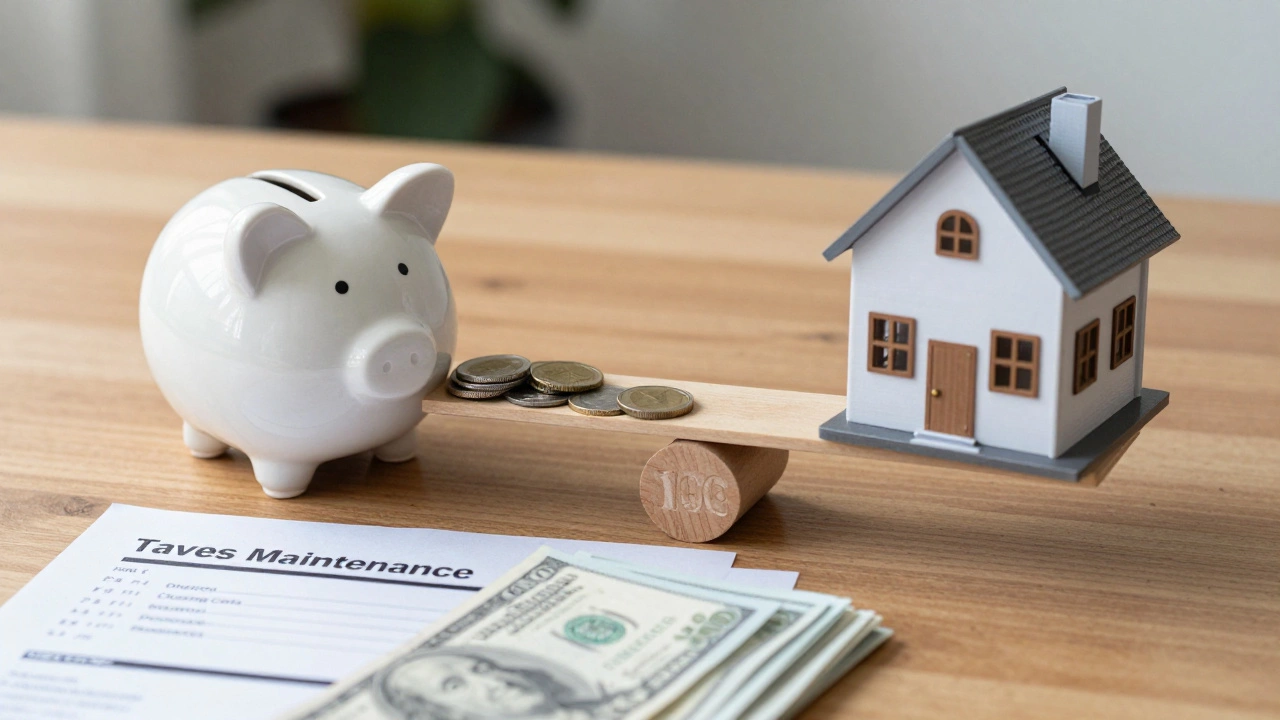
- Maintenance Fund: Experts recommend setting aside 1% of the home’s value annually for repairs. On a $350,000 home, that’s $3,500 a year, or roughly $290 a month. This money needs to come from somewhere. If your $2000 is your absolute max for housing, you might need to dip into other budgets for roof leaks or HVAC failures.
- Utilities: Moving from a rental to a owned home often means taking on trash collection, water, sewer, and possibly electricity/gas if they weren't included in rent. These can add $150 to $300 to your monthly outflow.
If your $2000 budget is strict, you must decide if it covers only the mortgage or the total cost of ownership. If it’s the latter, your actual loan capacity shrinks further. You might need to target homes in the $250,000 to $280,000 range to remain safe.
Strategies to Maximize Your $2000 Budget
Feeling constrained? You are not alone. But there are ways to stretch your dollar without sacrificing quality or safety.
1. Look at "Ugly" Houses
Homes that need cosmetic updates-bad paint, outdated kitchens, worn carpets-sell for less. If you have some DIY skills or can hire contractors for specific tasks, you can buy a cheaper home and sweat-equity your way into value. Just be wary of structural issues, which are far more expensive to fix than aesthetics.
2. Expand Your Geographic Radius
Commuting costs money, but so does housing. Look at towns 30 to 60 minutes outside the major employment hubs. In 2026, remote work remains prevalent for many industries. If you can work from home three days a week, living in a slightly more rural area becomes viable. Check train lines and highway access. A longer commute is a trade-off for more space and lower pressure.
3. Consider Condominiums with Low HOA Fees
In some markets, condos offer better value per square foot than detached homes. However, watch out for High Owners Association (HOA) fees. Some luxury buildings charge $500+ a month for amenities you don’t use. Look for no-frills buildings with essential maintenance covered but low monthly dues. This keeps your total housing cost predictable.
4. Improve Your Credit Score
This is the fastest way to increase your buying power without earning more money. A higher credit score qualifies you for a lower interest rate. Dropping from a 6.5% rate to a 5.5% rate on a $300,000 loan saves you nearly $100 a month. That $100 could be the difference between being approved and being denied, or between a cramped apartment and a spacious townhouse.
Is Renting Still Better?
With a $2000 budget, renting might seem easier. You hand over the check, and someone else fixes the toilet. But consider the long-term picture. Rent payments build someone else’s equity. Mortgage payments build yours. Even if the monthly cost is similar, the asset accumulation favors buying.
However, if home prices in your desired area are rising faster than your income, or if interest rates spike again, locking into a fixed-rate mortgage protects you from future volatility. Renters face annual lease renewals that can include significant hikes. Buyers with fixed rates enjoy payment stability for the life of the loan.
Calculate the break-even point. Typically, if you plan to stay in a home for five years or more, buying wins financially due to equity growth and tax benefits (where applicable). If you might move in two years, the transaction costs of buying and selling might outweigh the benefits.
Next Steps for Your Search
Start by getting pre-approved. Do not just shop online; go to a lender. Ask them specifically: "Based on a $2000 monthly payment cap, including taxes and insurance, what is the maximum loan amount I qualify for?" Get that number in writing. Then, filter your property searches by that loan amount plus your down payment savings.
Be prepared to compromise. You might not get the dream home immediately. You might start with a starter home-a smaller place that fits your budget-and upgrade later as your income grows. The goal is to get into the market, build equity, and establish roots. The perfect house is rarely the first one you buy, but the first one you buy is often the best teacher.
Can I buy a house with $2000 a month if I have bad credit?
It is difficult but possible. Bad credit leads to higher interest rates, which reduces the loan amount you can afford within that $2000 limit. You may need to save for a larger down payment to compensate. Consider working with a credit counselor to improve your score before applying, or look into government-backed loans that are more forgiving of lower credit scores.
Does the $2000 include property taxes and insurance?
Ideally, yes. Lenders calculate affordability based on your total debt-to-income ratio, which includes all housing-related costs. If your $2000 is only for principal and interest, you risk being underwater when tax bills arrive. Always budget for PITI (Principal, Interest, Taxes, Insurance) to get a true picture of your monthly obligation.
What is the best location to buy with a limited budget in 2026?
Look for secondary cities or regional towns with strong job growth but lower housing costs. Areas near major metros but separated by natural barriers (like rivers or mountains) often have spillover demand. Research local economic indicators: are new businesses opening? Is infrastructure improving? These signs suggest future appreciation.