
Virginia Emergency Housing Action Plan
Complete the steps below to ensure you are prepared to apply for emergency assistance.
1 Gather Documentation
Collect these essential documents immediately before contacting agencies.
2 Contact Agencies
Reach out to local Public Housing Agencies (PHAs) or Continuum of Care (CoC).
3 Intake Assessment
Be honest about vulnerabilities (health, veteran status) to increase priority score.
4 Find Housing & Submit RTA
Locate a willing landlord and submit Request for Tenancy Approval immediately.
Key Resources
Use these contacts if vouchers are unavailable or for immediate referrals.
Alternatives Table
| Direct Rent Aid | United Way / Salvation Army |
| Veterans (VASH) | VA Medical Centers |
| Domestic Violence | VA Coalition Against DV |
Critical Warning
Emergency vouchers often expire within 60-90 days. If you don't sign a lease quickly, you lose the voucher. Start looking for apartments the day you apply.
Imagine packing your life into two suitcases because you can’t pay this month’s rent. It happens faster than most people expect. In Virginia, where the cost of living has risen sharply since 2024, thousands of families face this exact crisis every year. You might think that getting help means waiting months on a list, but emergency housing vouchers are designed for immediate action. They bridge the gap between homelessness and stability.
If you are in trouble right now, time is your biggest enemy. This guide cuts through the bureaucracy to show you exactly how to get an emergency housing voucher in Virginia. We will look at who qualifies, which agencies hold the keys, and the specific steps you need to take today to secure housing before it’s too late.
Understanding Emergency Housing Vouchers in Virginia
The key difference here is speed and duration. Standard Section 8 helps you pay monthly rent for years. An emergency voucher might give you three to six months of rental assistance while you find a job or resolve a medical bill. Knowing this distinction prevents frustration later-you aren’t signing up for lifelong aid; you are securing a bridge out of crisis.
Who Qualifies for Emergency Assistance?
Qualification rules vary slightly by locality because Virginia does not have a single statewide emergency voucher program. Instead, funding flows to local PHAs and Continuums of Care (CoCs). However, federal guidelines set the baseline. To qualify, you generally must meet these criteria:
- Income Limits: Your household income must fall below 50% of the Area Median Income (AMI) for your county or city. For emergency cases, some programs stretch this to 80% AMI if you can prove a sudden loss of income.
- Imminent Risk: You must demonstrate that you will be homeless within 14 days without assistance. Eviction notices, foreclosure filings, or domestic violence restraining orders serve as proof.
- Citizenship Status: At least one member of the household must be a U.S. citizen, U.S. national, or qualified immigrant.
- Residency: You must live in the jurisdiction where you apply. If you are fleeing domestic violence, special waivers may allow you to apply in a new location.
Note that criminal background checks are part of the process. However, blanket bans are prohibited under federal law. The agency must consider the severity and recency of any offenses. If you have a record, do not assume automatic disqualification-be prepared to explain your circumstances.
Where to Apply: Key Agencies in Virginia
Finding the right door to knock on is half the battle. In Virginia, several entities manage emergency housing funds. Here is where you should start:
- Local Public Housing Agency (PHA): Every major city and many counties have a PHA. They administer the Housing Choice Voucher program. Call them directly and ask specifically about "rapid re-housing" or "emergency voucher availability." Do not just ask for Section 8; use the emergency terminology.
- Virginia DHCD: The Department of Housing and Community Development oversees state-level grants. Their website lists active Rapid Re-housing projects across the Commonwealth. Check their current project listings for your region.
- Continuum of Care (CoC): Virginia is divided into several CoC regions (e.g., Northern Virginia, Central Virginia, Hampton Roads). Each CoC coordinates homeless services. They maintain the HMIS (Homeless Management Information System) database, which tracks available beds and vouchers.
- 2-1-1 Virginia: Dialing 2-1-1 connects you with community resource specialists who know which local nonprofits currently have open slots for emergency rent assistance. This is often the fastest way to find non-governmental options.
In Northern Virginia, organizations like Arlington County Social Services and Fairfax County Department of Social Services have dedicated emergency units. In Richmond, the City of Richmond Human Services Division handles referrals. Always verify the current contact info, as office hours and intake methods change frequently.
Step-by-Step Application Process
Applying for emergency housing requires precision and speed. Follow these steps carefully:
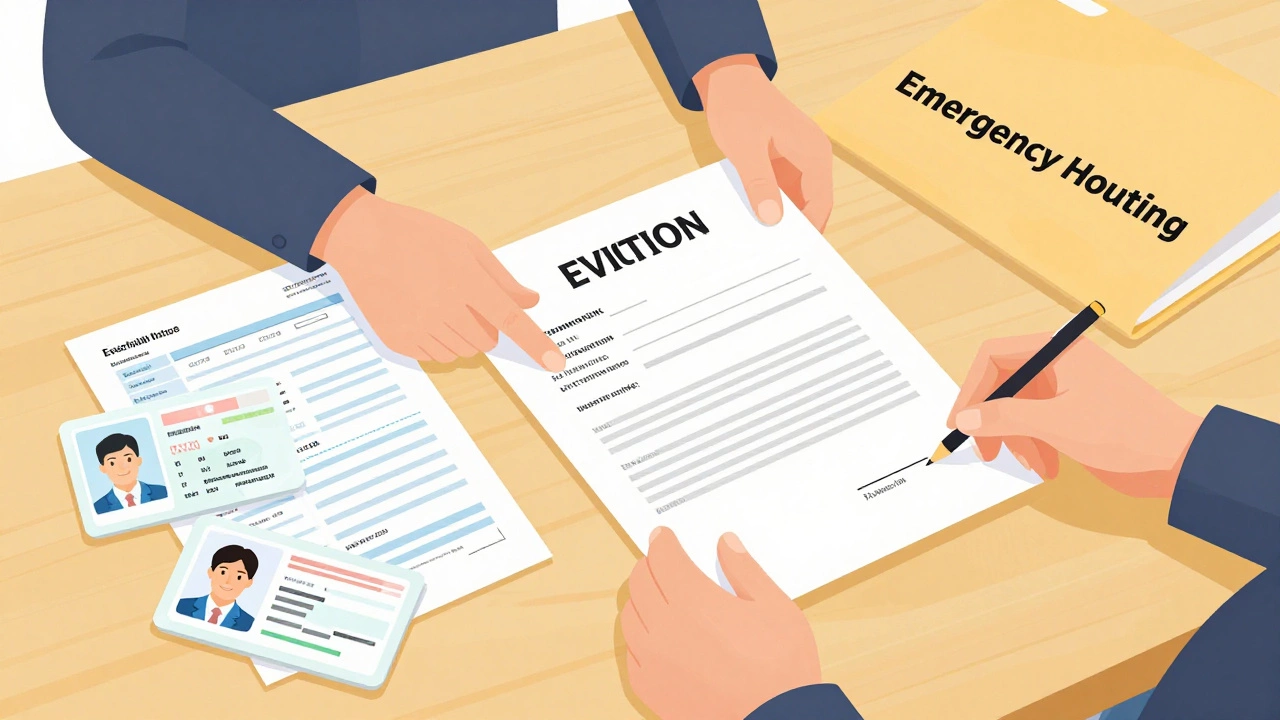
1. Gather Documentation Immediately
Do not wait until you submit the application to collect papers. Prepare a folder with:
- Proof of income (pay stubs, unemployment benefits award letters, or bank statements showing zero balance)
- Proof of residency (lease agreement, utility bills, or mail addressed to you)
- Eviction notice or landlord letter confirming inability to pay
- Photo ID for all household members
- Social Security numbers for all applicants
2. Contact the Local PHA or CoC
Call during business hours. If you cannot get through, go in person if possible. Explain your situation clearly: "I am facing eviction in [number] days and need emergency rental assistance." Ask for an intake specialist. If they say there are no vouchers, ask if they can refer you to a Rapid Re-housing partner organization.
3. Complete the Intake Assessment
You will likely fill out a VI-SPDAT (Veterans’ Integrated Service Priority Assessment Data Tool) or a similar prioritization form. Be honest about your vulnerabilities-mental health issues, disabilities, or veteran status can increase your priority score. High scores mean faster access to limited resources.
4. Secure a Housing Unit
Unlike traditional Section 8, you often need to find your own apartment quickly. The voucher covers the cost, but you must locate a willing landlord. Use online listings and call landlords directly. Tell them you have secured emergency funding. Many landlords prefer guaranteed payment over chasing late tenants.
5. Submit the Request for Tenancy Approval (RTA)
Once you find a place, submit the RTA to the PHA immediately. They will inspect the unit to ensure it meets Health and Physical Conditions standards. This inspection usually happens within 24-48 hours for emergency cases.
Common Pitfalls to Avoid
Mistakes delay approval, and delays cost homes. Watch out for these errors:
- Missing Deadlines: Emergency vouchers often expire within 60-90 days. If you don’t sign a lease in that window, you lose the voucher. Start looking for apartments the day you apply.
- Incomplete Paperwork: One missing signature can stall your case for weeks. Double-check every form before submitting.
- Choosing Overpriced Units: Vouchers have payment standards based on Fair Market Rent (FMR). If you pick a unit above the FMR for your area, you will have to pay the difference out of pocket. Stick to units within the subsidy limit.
- Ignoring Credit Checks: While PHAs don’t run credit checks, landlords do. If your credit is poor, offer a larger security deposit (if allowed) or provide references from previous landlords to reassure them.

Alternatives If Vouchers Are Unavailable
Sometimes, emergency vouchers are fully allocated. That doesn’t mean you’re out of options. Consider these alternatives:
| Program Type | Best For | Duration | Key Provider |
|---|---|---|---|
| Direct Rent Assistance | Immediate eviction prevention | 1-3 months | Local United Way, Salvation Army |
| Domestic Violence Shelters | Victims of abuse needing safe housing | Up to 6 months | VA Coalition Against Domestic Violence |
| Veterans Affairs Supportive Housing (VASH) | Homeless veterans | Long-term | VA Medical Centers + HUD |
| Temporary Shelter | Immediate safety while seeking housing | Nightly/Weekly | Local CoC Partners |
Contact local charities like the Red Cross or Catholic Charities. They often have discretionary funds for rent arrears. Also, check if your employer offers emergency loans or advance payments. Some companies have partnerships with housing nonprofits to help employees in crisis.
Next Steps After Securing a Voucher
Getting the voucher is only the beginning. Once you move in, you must comply with strict rules. Report any changes in income or household composition within 10 days. Failure to do so can result in termination of assistance. Attend all required workshops on financial literacy or job readiness. These programs are mandatory for most emergency vouchers and help you build skills to stay housed independently.
Finally, plan ahead. Emergency vouchers are temporary. Before your assistance ends, apply for long-term Section 8 vouchers, Medicaid, SNAP, or other benefits. Use the stability provided by the emergency voucher to rebuild your credit and savings. Stability is fragile, but with the right support, it can become permanent.
How long does it take to get an emergency housing voucher in Virginia?
Processing times vary by locality, but emergency cases are typically reviewed within 7-14 days. Rapid re-housing programs aim to place clients within 30 days. Delays often occur due to incomplete documentation or slow landlord inspections. Acting quickly and providing all paperwork upfront speeds up the process significantly.
Can I use an emergency housing voucher anywhere in Virginia?
No, vouchers are usually restricted to the jurisdiction where you applied. For example, a voucher issued by Arlington County PHA can only be used for housing within Arlington. Portability options exist for standard Section 8 vouchers, but emergency vouchers rarely allow cross-jurisdiction use due to limited funding pools.
What happens if my landlord refuses to accept the voucher?
Landlords cannot discriminate against voucher holders solely based on source of income in many Virginia cities, including Alexandria and Arlington. However, they can still screen tenants based on credit or criminal history. If a landlord refuses, keep searching. There are always other properties available, especially in higher-turnover markets.
Is there a waitlist for emergency housing vouchers?
Unlike regular Section 8, emergency vouchers do not have public waitlists. They are distributed on a first-come, first-served basis based on assessed vulnerability. Funds are replenished periodically, so if none are available now, check back weekly. Some agencies keep informal lists for when new funds arrive.
Do I have to pay back the emergency housing voucher money?
Generally, no. Emergency housing vouchers are grants, not loans. You do not repay them unless fraud was involved. However, you must maintain the housing for the agreed period. Moving out early without cause may require repayment of unused funds or trigger a review of your eligibility.