Buying property in Australia doesn’t just depend on how much you’ve saved-it hinges on your credit score. Lenders don’t just look at your income or deposit. They check your credit history to decide if you’re safe to lend to. A score below 600? You’ll likely get denied or stuck with high interest rates. But here’s the truth: you don’t need to wait months to fix it. You can start seeing movement in your credit score within weeks-sometimes even days-if you know what to do.
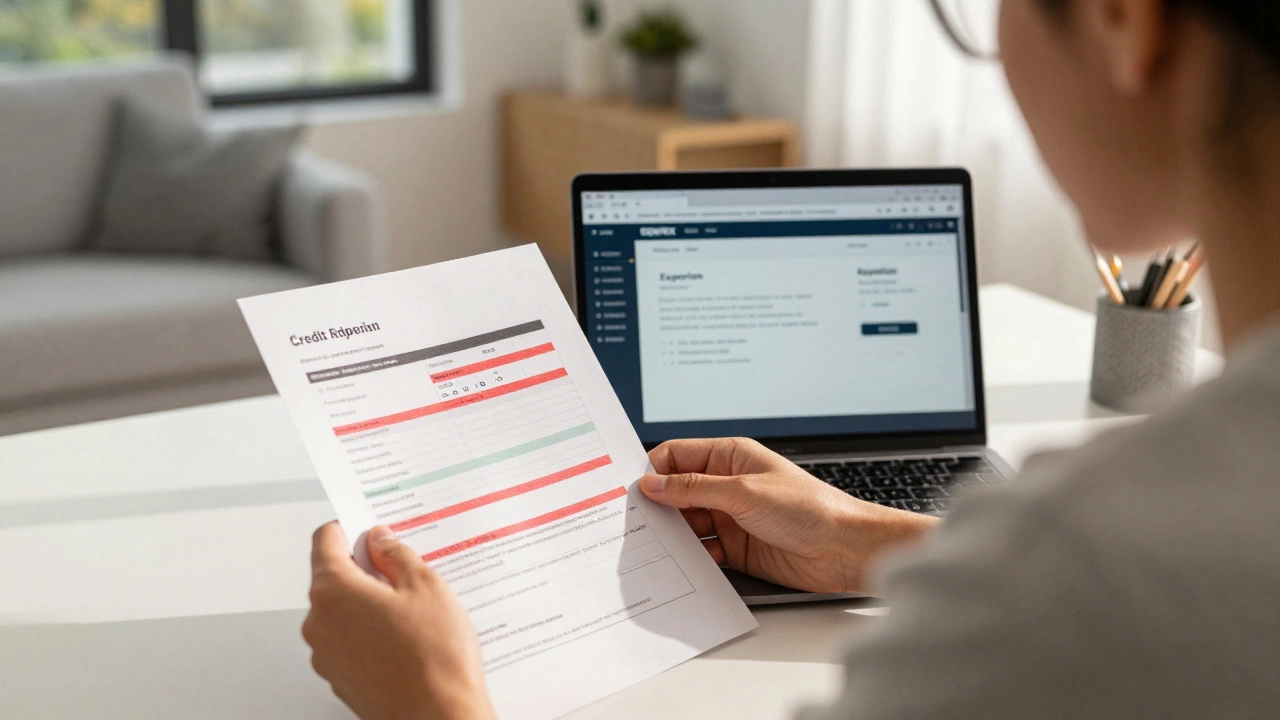
Check Your Credit Report for Errors
Your credit score isn’t magic. It’s built from data collected by agencies like Equifax, Experian, and Illion. And guess what? Up to 30% of these reports contain mistakes. A $200 unpaid bill that was never yours. A closed credit card still listed as active. A late payment that was actually paid on time. These errors drag your score down.
Get your free report from each agency. Don’t just glance at it. Read every line. Look for accounts you don’t recognize, balances that are wrong, or dates that don’t match your records. If you find something off, dispute it immediately. In Australia, you can do this online through the agency’s portal. Most errors are corrected within 14 to 30 days. That’s faster than waiting for a bank to approve your home loan.
Pay Down Your Credit Card Balances
Your credit utilization ratio is one of the biggest factors in your score. It’s the percentage of your available credit that you’re using. Experts say keeping it under 30% is good. But if you want to boost your score fast, aim for under 10%. That’s the sweet spot lenders notice.
Let’s say you have two credit cards. One has a $5,000 limit and you owe $3,000. That’s 60% utilization. Even if you pay on time, this alone can knock 50-70 points off your score. Pay down $2,000 right now. Don’t wait for payday. Use savings, a tax refund, or even a short-term loan from a family member. Once your balance drops below $500, your utilization hits 10%. You’ll likely see your score jump within the next billing cycle.
Ask for a Credit Limit Increase
If you can’t pay down your balance right away, increase your limit instead. This lowers your utilization without spending a cent. Call your bank. Say you’re applying for a home loan and want to improve your credit profile. Most banks will approve a limit increase if you’ve been a customer for over a year and have no recent late payments.
Don’t be afraid to ask. In Melbourne, banks like NAB and Commonwealth Bank routinely approve increases of $2,000 to $10,000 for reliable customers. Just don’t apply for new credit cards or loans while you’re doing this. Every hard inquiry can temporarily drop your score by 5-10 points.
Stop Applying for New Credit
Every time you apply for a credit card, personal loan, or even a phone plan, the lender checks your credit. That’s called a hard inquiry. Too many in a short time? Lenders think you’re desperate for money. That’s a red flag.
If you’ve applied for three credit cards in the last two months, stop. Don’t apply for anything new-not even a discount on your internet bill-until after your home loan is approved. Wait at least 60 days. Your score will recover naturally as those inquiries age.

Set Up Automatic Payments
Payment history makes up 35% of your credit score. One missed payment can cost you 100+ points. But if you’ve never missed one, and just want to lock it in, set up automatic payments. Even if you pay your bills manually, automation removes human error.
Link your credit card, phone bill, and utilities to direct debit. Set the payment date a few days before the due date. That way, even if you forget, the money’s already gone. Most banks let you do this in 2 minutes via their app. And once it’s done, your payment history looks flawless.
Use a Credit-Builder Loan (If You Have No Credit History)
If you’re young, new to Australia, or have never borrowed before, you might have no credit history at all. That’s just as bad as a bad score. Lenders can’t assess risk if there’s no record.
Some credit unions in Melbourne offer credit-builder loans. You deposit $1,000 into a locked savings account. The credit union gives you a $1,000 loan. You pay it back in 12 monthly installments. Each payment gets reported to credit agencies. After 12 months, you get your $1,000 back-with interest. And your score? It jumps from zero to 600+.
Look for options at Beyond Bank, Heritage Bank, or local community lenders. This isn’t a scam. It’s a proven path for first-time buyers.
Get Your Rent Reported
Most Australians don’t know this: your rent payments can help your credit score. If you’ve been paying your rent on time for a year or more, you can ask your landlord or property manager to report it to credit bureaus.
Services like Rental History Australia and Tenancy Tracking allow landlords to submit rent payment data. It’s free for tenants. Just send your landlord a link to the service. If they agree, your rent history will show up on your credit report within 30 days. This works especially well if you’ve been renting for over 18 months.

What Not to Do
Don’t close old credit accounts. Even if you don’t use them, they help your credit age. Closing them shortens your history and can hurt your score.
Don’t become an authorized user on someone else’s card unless you’re sure they have perfect payment habits. One missed payment by them can drag your score down.
Don’t pay for credit repair services. In Australia, these companies charge $500-$2,000 to do what you can do yourself for free. They can’t remove accurate negative marks. Only time and good habits can fix those.
How Long Until You See Results?
Here’s what you can realistically expect:
- Within 7 days: Disputing errors starts the clock. You’ll see updates after the agency reviews your claim.
- Within 14 days: Paying down balances or increasing limits shows up on your next statement.
- Within 30 days: Automatic payments and rent reporting kick in. Your score can jump 40-80 points.
- Within 60 days: If you’ve done all the above, your score could be 100+ points higher.
That’s not just a number. That’s the difference between a 7.5% interest rate and a 5.8% rate on a $600,000 home loan. Over 30 years, that’s over $100,000 in savings.
Next Steps
Start today. Go to your credit report portal. Pull your report. Find one error to dispute. Pick one credit card and pay down $1,000. Set up one automatic payment. Do those three things, and in two weeks, you’ll have a better shot at the home you want.
Buying property isn’t about how rich you are. It’s about how reliable you look to lenders. Fix your credit score, and the rest follows.
Can I boost my credit score overnight?
No, you can’t boost your credit score overnight. Credit scores are calculated based on months or years of financial behavior. But you can see noticeable improvements in as little as two weeks by fixing errors, lowering credit card balances, or setting up automatic payments. The fastest changes come from reducing your credit utilization ratio-paying down debt or increasing your credit limit.
Does checking my own credit score hurt it?
No, checking your own credit score doesn’t hurt it. This is called a soft inquiry and has no impact on your score. You’re allowed to check your report as often as you like. In fact, it’s recommended to review it at least once a year-or before applying for a home loan. Only hard inquiries (like applying for a new credit card or loan) affect your score.
What credit score do I need to buy a house in Australia?
There’s no official minimum, but lenders typically look for a score above 620 to approve a home loan. A score of 700 or higher gives you access to better interest rates and more loan options. Some lenders may approve applicants with scores as low as 550, but they’ll require a larger deposit, higher interest rates, or a co-signer. The higher your score, the more negotiating power you have.
Will paying off all my debt instantly raise my credit score?
Paying off debt helps, but it doesn’t always instantly raise your score. If you pay off a credit card and close the account, your credit utilization might actually go up if you have other balances. It’s better to keep the account open with a low balance. Also, if you pay off a loan, you lose an active account, which can slightly lower your score in the short term. The key is balance: pay down debt, keep accounts open, and avoid new applications.
Can I buy property with no credit history?
Yes, but it’s harder. Lenders need to see you’re reliable. If you have no credit history, you can still qualify by providing proof of consistent income, a large deposit (20% or more), and evidence of on-time rent or utility payments. Some lenders accept rent reporting services or bank statements showing regular savings. A credit-builder loan can also help establish a history before you apply.