Virginia Property Tax Estimator
Use this tool to estimate your annual property tax bill. Enter your home's assessed value and the specific tax rate for your county or city.
Estimated Results
How it works: Virginia calculates tax by dividing your Assessed Value by 100, then multiplying by the Tax Rate. Exemptions reduce the total assessed value before calculation.
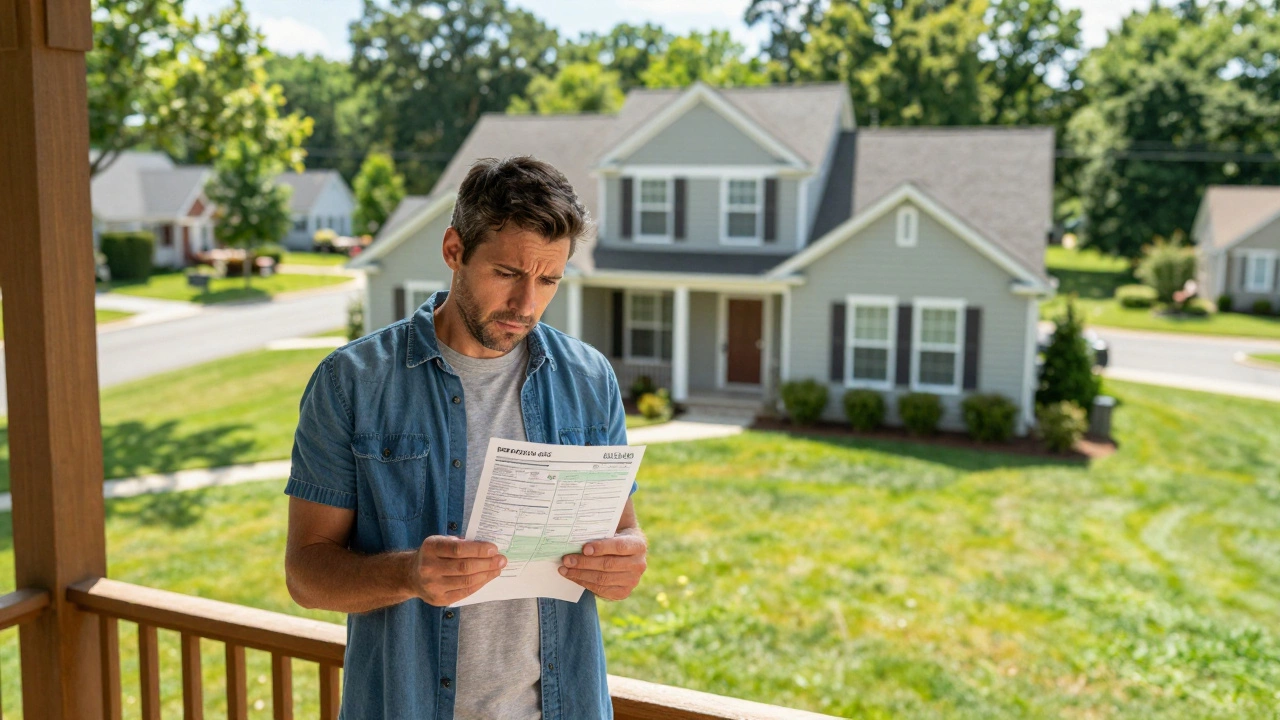
You bought a house in Virginia, or maybe you’re thinking about it. You’ve got the mortgage sorted, the inspection done, and the keys in hand. But then there’s that annual bill that feels like a mystery box: your property tax. How much is it? Who do you pay? And why does your neighbor with a similar-sized house seem to pay less?
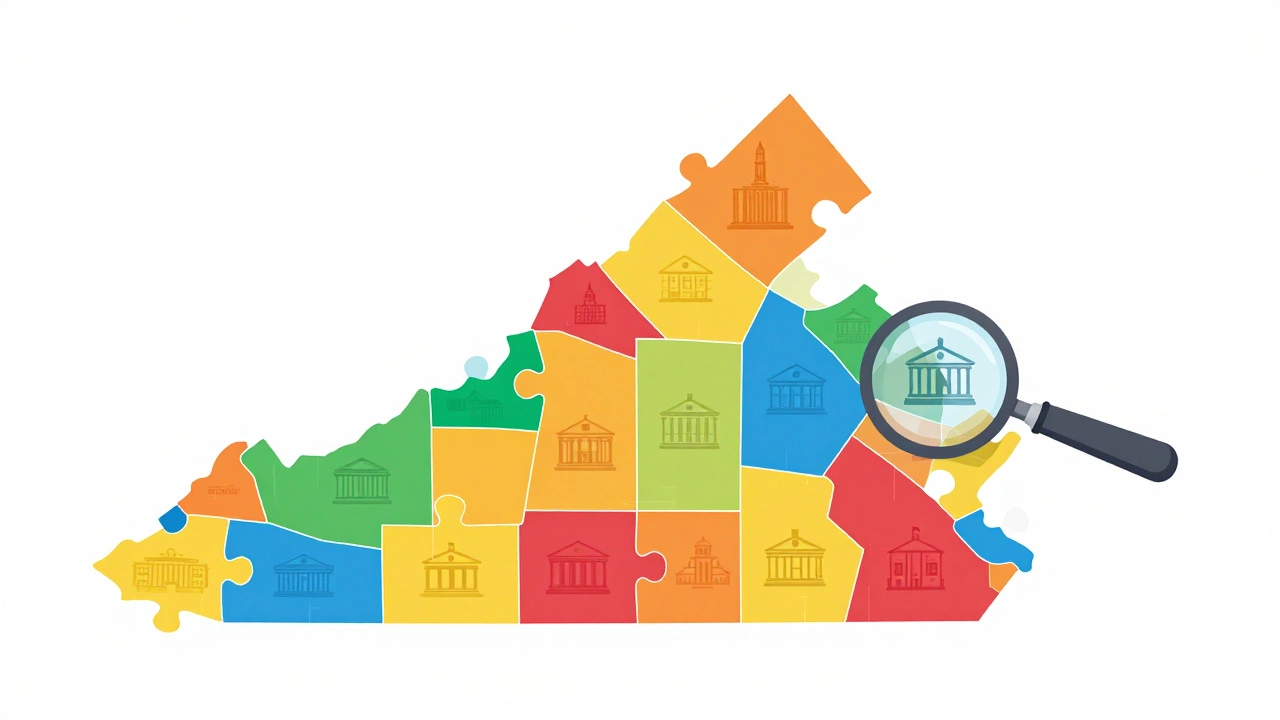
Finding this information doesn’t have to be a headache. In Virginia, property taxes are local, not state-wide. That means the rules change depending on which of the 95 counties or 38 independent cities you live in. There is no single "Virginia State Tax Portal" where you type in your address and get a universal answer. Instead, you need to know exactly which local office handles your specific piece of land.
This guide cuts through the bureaucracy. We’ll walk you through the exact steps to find your current tax bill, understand how your home was valued, and check if you’re paying the right amount based on current 2026 regulations.
Identify Your Local Jurisdiction
The first step is knowing who collects your money. Virginia has a unique setup compared to other states. Most states have a state-level department that oversees property taxes. Virginia does not. The power rests entirely with local governments.
If you live in a county, your County Treasurer and Commissioner of the Revenue are your main contacts. If you live in an independent city (like Richmond, Norfolk, or Alexandria), the city government handles everything directly.
To find your jurisdiction:
- Look at your previous tax bill. It will list the issuing authority at the top.
- If you don’t have a bill, go to virginiacounties.org. This is the official site for the Virginia Association of Counties. They have a map tool where you can enter your ZIP code or address to see which county or city you belong to.
- Alternatively, search Google for "[Your City Name] Virginia property tax". For example, "Arlington County property tax" or "Charlottesville City tax".
Once you know the name of your local government, bookmark their official website. This is the only place you should trust for accurate data. Third-party sites often lag behind by months or even years.
Use the Official Online Search Tools
Almost every locality in Virginia has moved its records online. You don’t need to call anyone or visit an office unless something is wrong. Here is how to use these tools effectively.
1. Find the "Taxpayer Services" or "Real Estate Search" page. On your local government’s website, look for menus labeled "Treasurer," "Revenue," or "Assessor." Click into those sections. You are looking for a link that says "Search by Address," "Parcel Viewer," or "Tax Bill Lookup." 2. Enter your identifying information. You usually need one of two things:
- Your street address (including apartment number if applicable).
- Your Parcel ID number (also called a Map/Parcel number). This is found on your deed or previous tax statements. It looks like a string of numbers and letters, e.g., "072-12-045-A".
- Fair Market Value (FMV): What the assessor thinks your home is worth today.
- Assessed Value: The value used for tax calculations. In most of Virginia, this is 100% of the Fair Market Value.
- Tax Rate: Expressed as dollars per $100 of assessed value. For example, a rate of "$0.95" means you pay $0.95 for every $100 your home is worth.
For instance, if your home in Fairfax County is assessed at $500,000, and the rate is $1.0273 per $100, your base tax calculation is ($500,000 / 100) * $1.0273 = $5,136.50. Keep in mind this is before any exemptions or credits.
Understanding Assessment vs. Tax Rate
Many homeowners confuse their property's value with the tax rate. Both affect your final bill, but they are controlled by different people.
The Assessor determines the value. The Office of the Assessor (or Commissioner of the Revenue) visits properties periodically. They don’t always knock on your door; they often use mass appraisal models based on recent sales of similar homes nearby. If housing prices in your neighborhood jumped 10% last year, your assessed value likely did too. This happens regardless of whether you sold your home.
The Board of Supervisors/City Council sets the rate. The elected officials decide how much revenue they need for schools, roads, and police. They set the "millage rate" or "tax rate per $100." Some counties keep rates stable for years. Others raise them annually to fund new projects.
If your tax bill goes up, ask yourself: Did my home’s value go up, or did the local government raise the rate? Or both? Checking the historical data on your local tax portal can tell you. Most portals allow you to view the last 3-5 years of assessments and rates side-by-side.
Check for Exemptions and Credits
You might be paying more than you need to if you haven’t claimed available exemptions. Virginia offers several programs that reduce your taxable value or provide direct credits.
| Exemption Type | Who Qualifies | Benefit |
|---|---|---|
| Homestead Exemption | Primary residents (varies by county) | Reduces assessed value by a fixed amount (e.g., $25,000-$50,000) |
| Senior Citizen/Military | Age 65+ or active duty/reserved military | Caps assessment growth or provides credit against tax bill |
| Disabled Veterans | Veterans with service-connected disabilities | Full exemption for 100% disability; partial for lower percentages |
| Green Building Credit | Homes with certified energy-efficient upgrades | Reduces taxable value by cost of improvements (up to limits) |
These exemptions are not automatic. You must apply for them. Usually, you fill out a form on your local Commissioner of the Revenue’s website. If you recently turned 65 or returned from military service, log in to your local portal now. Applying late might mean you miss out on refunds for the current year.
What If You Disagree With the Valuation?
Sometimes the assessor gets it wrong. Maybe your roof collapsed last year, or the "comparable" homes they used were renovated mansions while yours needs work. If your assessed value seems inflated, you have the right to appeal.
Steps to Appeal:
- Research comparable sales. Find 3-5 homes similar to yours that sold recently in your immediate neighborhood. Note their square footage, age, condition, and sale price.
- Document defects. Take photos of any issues that lower your home’s value (cracks, outdated systems, water damage).
- Contact the Assessor’s Office. Before filing a formal appeal, call or email the assessor. Sometimes, providing evidence here resolves the issue without a hearing. They may adjust the value informally.
- File a Formal Protest. If informal talks fail, file a protest with the Board of Appeals (or Circuit Court). Virginia has strict deadlines. Typically, you have 30 days from the date of the notice of assessment to file. Miss this window, and you’re stuck paying until next year.
Appealing costs time, but if your home is overvalued by $50,000, saving $500-$1,000 a year in taxes makes it worth it.

Paying Your Taxes: Deadlines and Methods
Knowing your tax amount is half the battle. Paying it on time is crucial because penalties in Virginia can add up quickly.
Payment Dates: Most jurisdictions split payments into two installments:
- First Installment: Due by July 1 (covering Jan-Jun).
- Second Installment: Due by December 1 (covering Jul-Dec).
- Online: Most treasurers accept credit cards and e-checks via secure portals. Note that credit card processors charge a fee (usually 2-3%), so e-checks are cheaper.
- Mail: Send checks payable to the "County Treasurer" or "City Treasurer." Use certified mail to prove delivery.
- In-Person: Visit the Treasurer’s office during business hours. Cash and checks are accepted.
Special Cases: Condos and HOAs
If you own a condominium, the process is slightly different. In many cases, the condo association pays the property tax on the entire building and passes the cost to you as part of your monthly HOA fees. However, you still own a "parcel" of land (your unit).
To verify if your HOA covers taxes:
- Ask your HOA manager for the annual budget breakdown.
- Check your local tax portal using your unit address. If it shows a zero balance or a very small amount, the HOA likely handles the bulk.
- If the portal shows a large personal bill, you are responsible for paying it directly to the county/city, separate from your HOA dues.
Don’t assume. I’ve seen homeowners assume their HOA covered it, miss the deadline, and rack up penalties. Always double-check with your local treasurer.
Is there a statewide website to look up all Virginia property taxes?
No. Virginia does not have a centralized database for individual property tax bills. Each of the 95 counties and 38 independent cities manages its own records. You must visit the specific website for your local jurisdiction (e.g., Fairfax County, City of Richmond) to look up your tax information.
How often are property values reassessed in Virginia?
Most jurisdictions in Virginia conduct a full revaluation every four years. However, some areas revalue annually or biennially. New construction and major renovations are assessed immediately upon completion. Check your local Commissioner of the Revenue’s website for the specific revaluation cycle in your area.
Can I pay my Virginia property taxes online?
Yes, almost all Virginia counties and cities offer online payment options through their Treasurer’s office website. You can usually pay by e-check (ACH) or credit card. Be aware that credit card payments often incur a convenience fee of 2-3%, while e-checks are typically free.
What happens if I miss my property tax payment deadline?
Late payments incur interest charges, typically around 10-12% per year. If taxes remain unpaid for six months or more, the county or city can place a lien on your property and eventually foreclose on it to recover the owed amounts. It is critical to pay by July 1 and December 1 deadlines.
Do I need to apply for senior citizen property tax exemptions?
Yes. Senior citizen exemptions are not automatic. You must submit an application to your local Commissioner of the Revenue when you turn 65. Requirements vary by locality, but generally, you must own and occupy the home as your primary residence. Applications are often available online on your local government’s website.