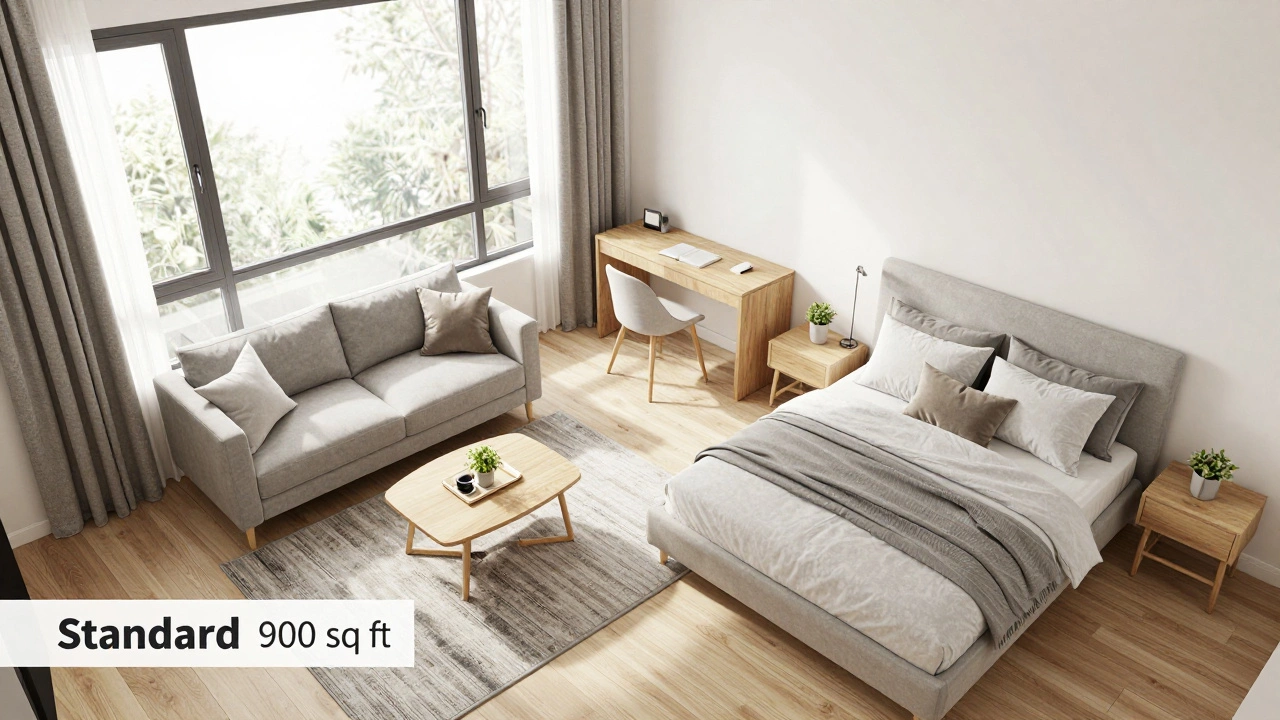
2-Bed Flat Size & Lifestyle Estimator
Space Planning Tool
Estimated Total Area
Detailed Breakdown:
The Quick Breakdown of Size Categories
Before you start scrolling through listings, you need to know which 'tier' of apartment you're looking at. A flat that is 700 square feet feels very different from one that is 900, even though it's only a 200-square-foot difference. That gap is often the difference between having a dedicated dining area or eating your dinner on the coffee table.| Category | Square Footage (Approx) | Vibe | Best For |
|---|---|---|---|
| Compact | 600 - 750 sq ft | Cozy/Tight | Singles, young couples, or minimalists |
| Standard | 800 - 950 sq ft | Balanced | Small families, roommates, or home-office needs |
| Spacious/Luxury | 1,000 - 1,300+ sq ft | Airy/Open | Growing families or those who host guests |
Breaking Down the Room-by-Room Dimensions
To really understand if a flat is a "good size," you have to stop looking at the total number and start looking at the individual rooms. A 900-square-foot flat with a massive living room but tiny bedrooms is a nightmare if you actually need those bedrooms for sleeping or working.Let's look at the Master Bedroom. For a comfortable sleep, you want enough room for a queen or king-size bed and two nightstands without hitting the wall when you get up. A good target is roughly 12' x 14' (about 168 sq ft). If it drops below 10' x 10', you're looking at a room that can barely fit a double bed, let alone a dresser.
Then there's the Second Bedroom. This is the 'flex' room. Is it for a child, a guest, or a home office? If it's a kid's room, 10' x 11' is usually plenty. If you plan to use it as a professional workspace, you'll want a bit more breathing room to avoid that 'cubicle' feeling. One of the biggest mistakes buyers make is assuming the second bedroom is the same size as the master; in most standard layouts, it's significantly smaller.
The living area-often called the Hall in 2BHK contexts-should be the heart of the home. A good size here is around 200 to 300 square feet. This allows for a proper sofa set, a TV unit, and a small dining table. If the living room is combined with the kitchen in an open-plan layout, you can get away with a slightly smaller footprint because the visual space feels larger.
The Hidden Space Killers: Layout and Efficiency
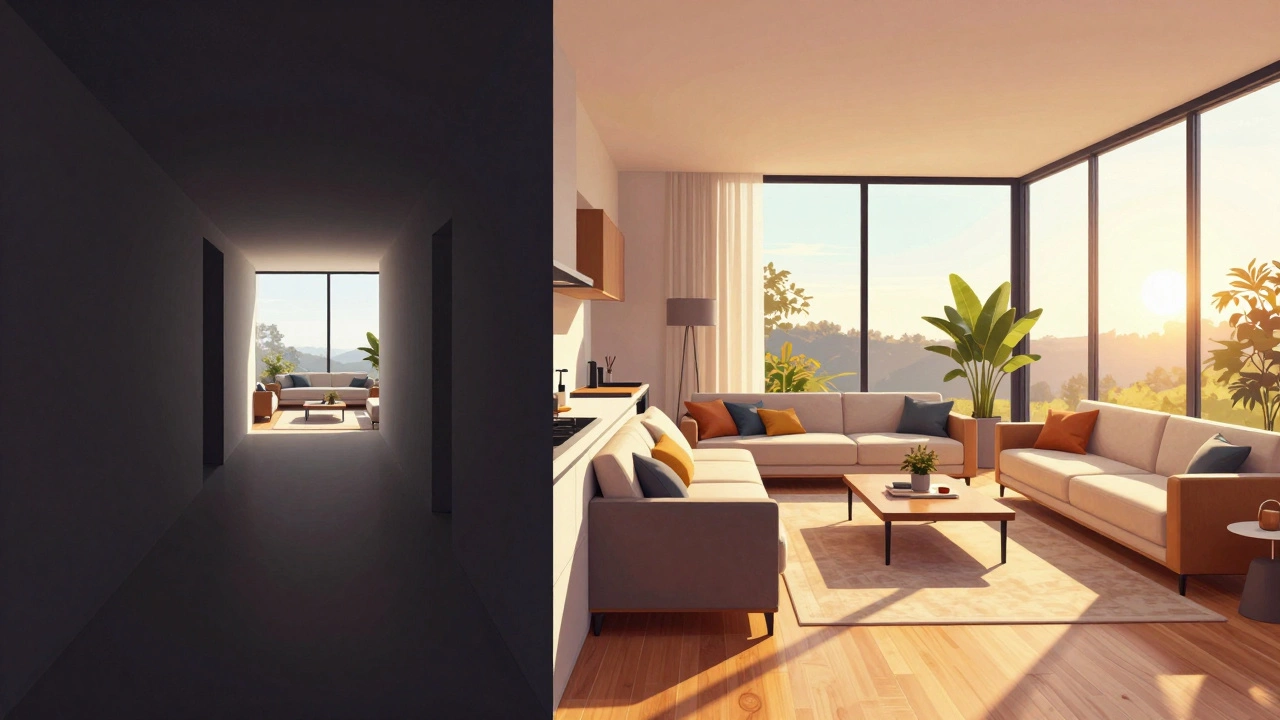
Square footage is a vanity metric if the layout is bad. You've probably seen flats with long, dark hallways that take up 50 square feet of space but provide zero value. This is what architects call "dead space." A high-efficiency layout minimizes corridors and maximizes usable room area.Consider the Floor Plan. An "L-shaped" living room often feels bigger than a narrow rectangular one because it naturally divides the lounging area from the dining area. Also, look at where the windows are. A 700-square-foot flat with floor-to-ceiling windows and plenty of natural light will almost always feel larger than a 900-square-foot flat with small, high windows and dark walls.
Don't forget the Kitchen and bathrooms. A galley kitchen is great for efficiency but can feel like a wind tunnel if it's too narrow. Aim for at least 5-6 feet of width so two people can pass each other without a choreographed dance. As for bathrooms, a standard full bath needs about 40-60 square feet. If you have two bedrooms but only one bathroom, the flat will feel smaller and more crowded regardless of the total square footage, simply because of the "traffic jam" that happens during morning routines.
Matching Size to Your Lifestyle
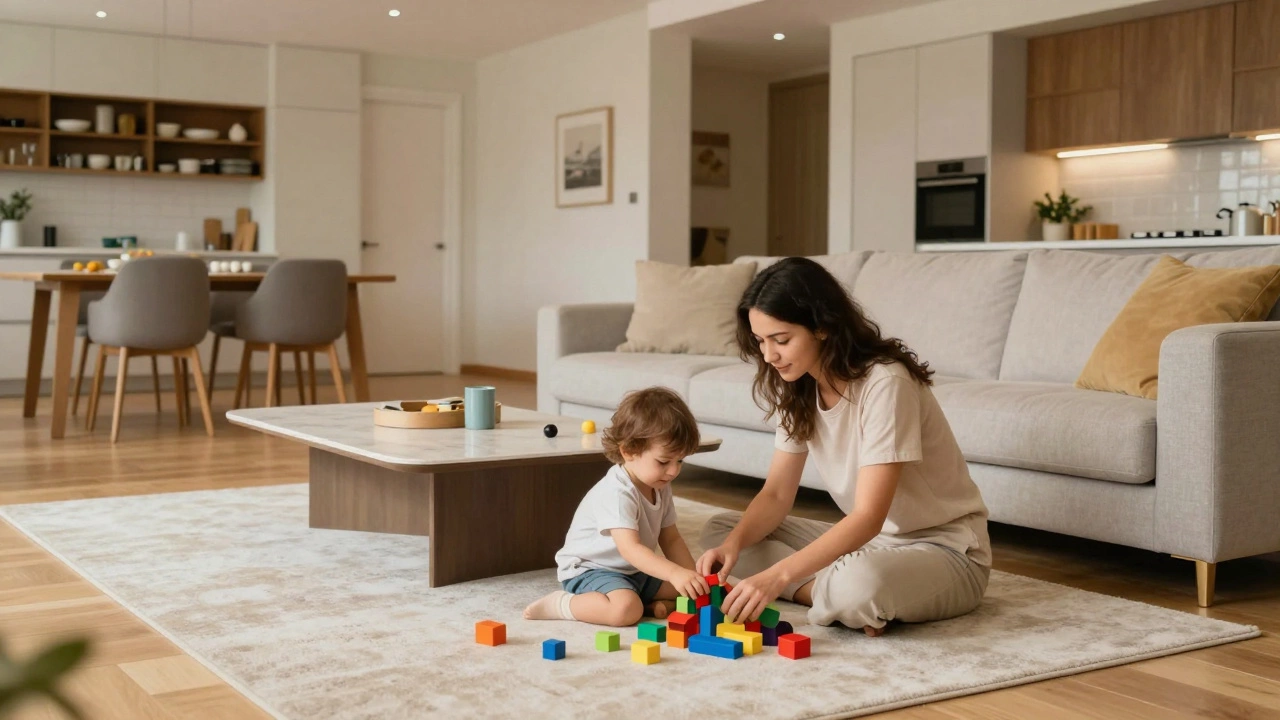
Who is actually living here? That's the only question that matters. If you are a single professional using the second bedroom as a dedicated office, a 750-square-foot flat is a dream. It's easy to clean, cheap to heat, and keeps you organized. You don't need 1,200 square feet if you spend 90% of your time in two of the rooms.On the other hand, if you're a couple with a toddler, a compact flat becomes a prison very quickly. Between the crib, the toy bins, and the stroller, that "cozy" 700-square-foot space disappears. For small families, hitting that 900-1,100 square foot mark isn't a luxury-it's a necessity for mental health. You need a place where the kids can play on the floor without knocking over the coffee table.
Another factor is the storage. Many smaller flats compensate for a lack of square footage with Built-in Wardrobes. If a flat has smart, recessed storage, you can actually afford to go smaller on the overall dimensions. But if you have a collection of oversized suitcases and a massive wardrobe, you'll need the extra bulk of a larger unit or you'll end up buying freestanding cabinets that eat up the remaining floor space.
Common Pitfalls When Judging Flat Sizes
One of the most deceptive things in real estate is the difference between "Gross Area" and "Net Area." The gross area often includes the thickness of the walls and sometimes even a portion of the common lobby or balconies. If a developer tells you a flat is 850 square feet, you might find that the actual walkable space (the carpet area) is only 680 square feet. Always ask for the carpet area-that's the only number that tells you how much furniture you can actually fit.Another trap is the "multipurpose room." Some listings describe a tiny 7' x 8' nook as a bedroom. While technically it has four walls and a door, it's barely a walk-in closet. If you're looking for a true 2-bed flat, ensure the second room can actually fit a bed and a bedside table. If it can't, it's a 1-bed flat with a study, and you should price it as such.
Finally, watch out for the ceiling height. A flat with 10-foot ceilings feels significantly larger than one with 8-foot ceilings, even if the floor area is identical. High ceilings allow for taller shelving and create a sense of volume that prevents the "closed-in" feeling common in older apartment blocks.
Quick Checklist for Your Next Viewing
When you're standing in a flat, don't just look at the walls. Do a mental (or physical) walkthrough with these points in mind:- The Bed Test: Can a queen-size bed fit in the master without blocking the closet door?
- The Dining Test: Is there a clear spot for a table that doesn't block the path to the balcony?
- The Circulation Test: Can two people pass each other in the hallway or kitchen without squeezing?
- The Light Test: Does the light reach the corners, or are there "dead zones" that will feel gloomy?
- The Storage Test: Where will the vacuum cleaner, ironing board, and winter coats go?
What is the absolute minimum size for a functional 2-bedroom flat?
For a flat to be truly functional as a two-bedroom-meaning both rooms can fit a bed and basic furniture-you generally need at least 650 to 700 square feet. Anything smaller usually results in one of the bedrooms being a "single" or a study, which limits your options for guests or children.
Is more square footage always better?
Not necessarily. Larger flats come with higher purchase prices, higher property taxes, and significantly higher utility bills. If you don't have the furniture or the lifestyle to fill 1,200 square feet, you're essentially paying to clean and heat empty air. Efficiency is usually more valuable than raw size.
How does an open-plan layout affect the perceived size?
Open-plan layouts remove interior walls between the kitchen and living room, which increases the "sightlines." When your eye can travel from the front door all the way to the window in the kitchen, the brain perceives the space as larger and airier, even if the actual square footage is the same as a partitioned flat.
What is a good size for the second bedroom if it's used as an office?
If the room is strictly for work, 90 to 110 square feet (roughly 9' x 10' or 10' x 11') is usually sufficient. This allows for a large desk, an ergonomic chair, and a bookshelf while still leaving room to move around without feeling trapped.
Does the balcony count towards the 'good size' of a flat?
While a balcony adds to the total area, it doesn't provide the same utility as internal space. It's great for ventilation and mental health, but you shouldn't rely on a large balcony to make up for a cramped living room. Always distinguish between "internal area" and "outdoor area" when evaluating size.
Next Steps for Your Search
If you're still unsure, start by measuring your current furniture. Knowing that your sofa is exactly 84 inches long prevents you from buying a flat where the sofa blocks the only exit to the balcony. If you're moving from a larger house to a flat, be ruthless with your belongings; a 900-square-foot flat feels like a palace if you only own what you need, but it feels like a warehouse if you try to bring everything from a 3-bedroom home.For those on a budget, look for "standard" size flats (800-900 sq ft) in slightly older buildings. These often have larger individual rooms and fewer "dead" corridors than the ultra-modern high-rises, giving you more actual living space for your money.