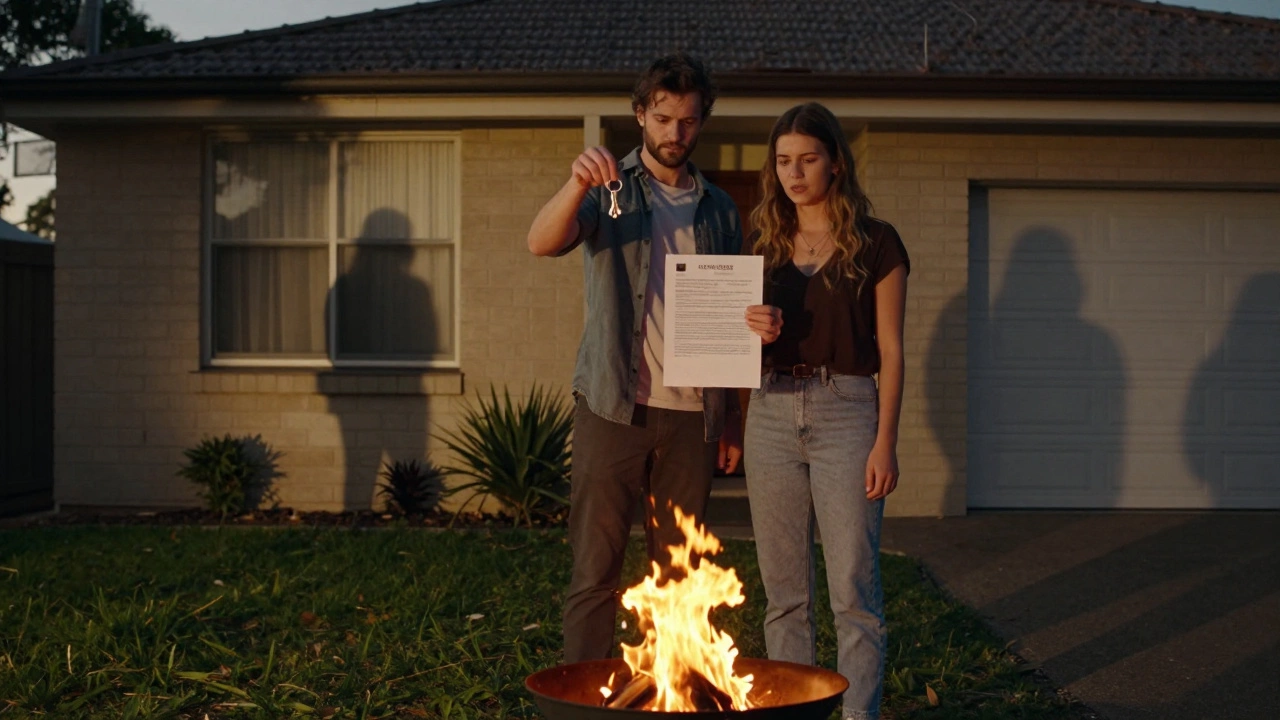
Lease to Own Cost Calculator
Calculate Your Lease to Own Costs
Results
Your lease to own agreement would cost you $ over the term.
Risk Warning: If you cannot secure financing at the end of the lease, you will lose your option fee and all rent credits.
Your Costs
Option Fee: $
Total Rent Paid: $
Total Equity Credits: $
Alternative Options
First Home Owner Grant (NSW): $
First Home Owner Grant (Victoria): $
Guarantor Loan Advantage:
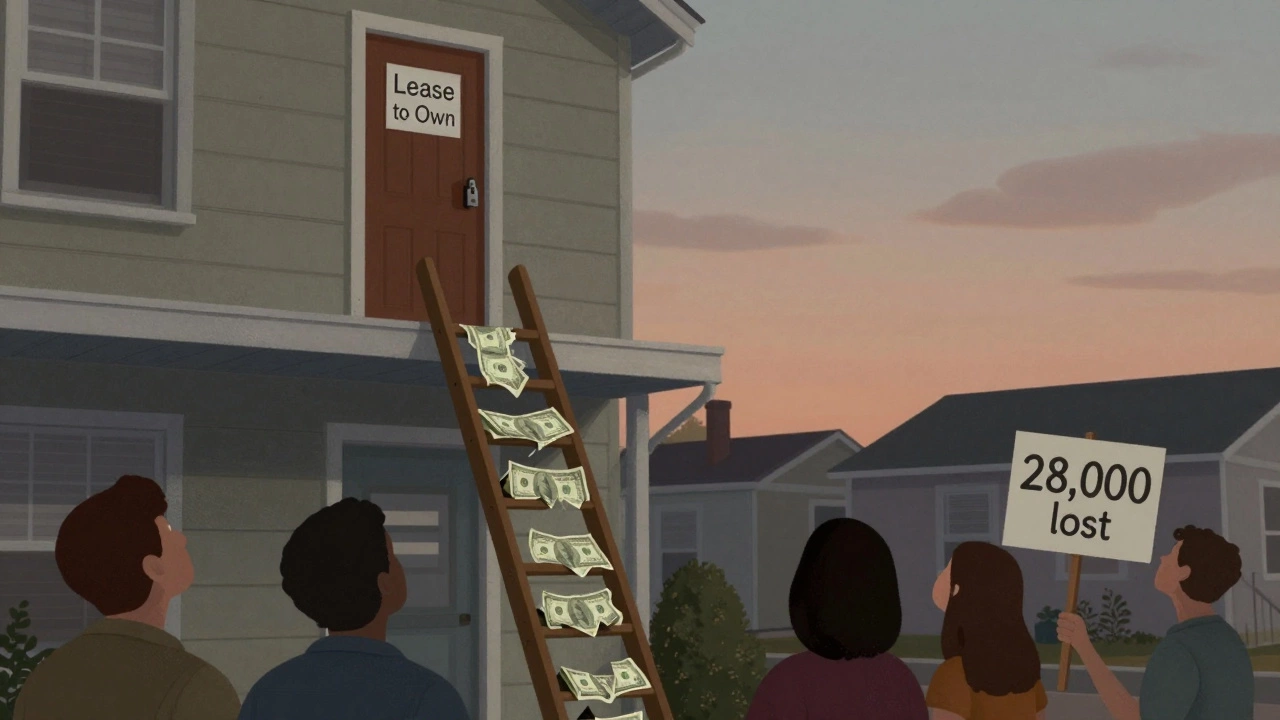
Based on Australian data: Only 30% of lease-to-own participants complete the purchase. You risk losing an average of $28,000 in fees and rent credits.
Lease to own sounds like a shortcut to homeownership-pay rent now, own the house later. But in Australia, it’s not as simple as it looks. If you’ve been told this is your ticket out of renting and into a home, you need to know what’s really on the line. This isn’t a magic fix. It’s a high-risk contract with hidden costs, strict rules, and plenty of ways to lose everything you’ve paid.
How lease to own actually works
A lease to own agreement (also called rent to own) lets you rent a property with the option-or sometimes the obligation-to buy it at a later date. Usually, part of your monthly rent goes toward a future down payment. That’s the promise: pay rent, build equity, and walk away with keys to your own home.
Here’s how it typically plays out: you sign a 2- to 3-year contract. The seller sets a fixed purchase price upfront, often higher than current market value. You pay a non-refundable option fee-usually 2% to 5% of the home’s price. Then, every month, your rent is split. A portion covers normal rent, the rest goes into an escrow account as your "equity". At the end of the term, you’re expected to secure a mortgage and close the deal.
It sounds fair. But here’s the catch: if you can’t get a loan by the end of the lease, you lose your option fee and all the rent credits. No refund. No second chance. And in Australia, where interest rates are still above 6% and lending rules are tight, that’s a real risk.
Who lease to own is really for
This isn’t for everyone. It’s mostly aimed at people who can’t qualify for a mortgage right now but believe they’ll be able to in a few years. Maybe you’ve got bad credit. Maybe you haven’t saved enough for a deposit. Or maybe you’re on a temporary visa and can’t borrow yet.
But here’s the truth: most people who enter these deals don’t end up buying. A 2023 study by the Australian Competition and Consumer Commission (ACCC) found that fewer than 30% of lease-to-own participants in Victoria and New South Wales completed the purchase. The rest lost an average of $28,000 in fees and rent credits.
Why? Because life doesn’t follow the plan. Job loss. Medical bills. Relationship breakdowns. Interest rates rise. Lenders tighten rules. And suddenly, that "future mortgage" you counted on? It’s gone.
The hidden traps
Lease to own contracts are full of fine print designed to protect the seller-not you.
- Fixed price risk: The purchase price is locked in at the start. If property values drop, you’re still stuck paying more than the house is worth.
- No maintenance rights: Most contracts say you’re responsible for repairs-even though you don’t own the house yet. A broken water heater? You pay. Roof leak? You fix it. That’s not owning. That’s renting with extra bills.
- Non-refundable fees: That 5% option fee? Gone if you walk away. Even if the seller breaches the contract.
- Unregulated contracts: Unlike standard home loans, lease-to-own agreements aren’t covered by the National Consumer Credit Protection Act. That means no cooling-off period. No lender responsibility. No legal safety net.
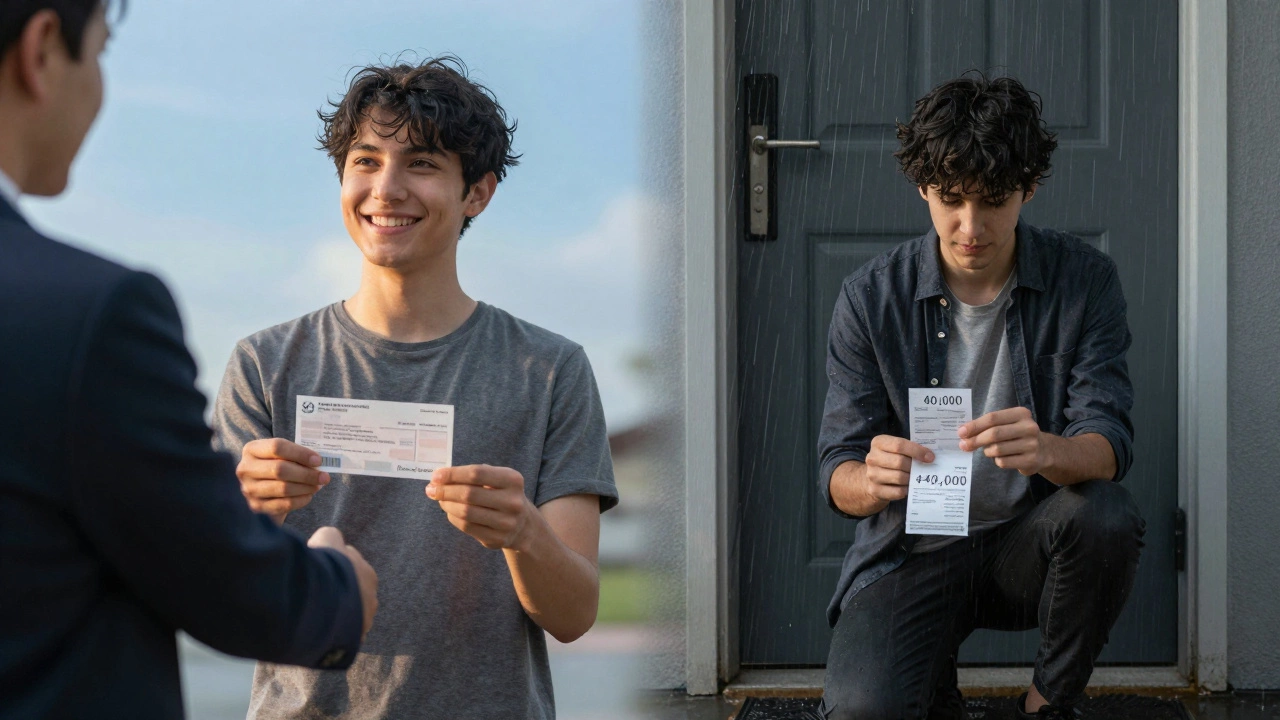
One Melbourne buyer, Sarah, signed a lease-to-own deal in 2022 for a $650,000 home in Dandenong. She paid $3,000/month rent, with $800 going toward equity. Two years later, she was denied a loan because her income dropped during a pandemic layoff. She lost $40,000 in rent credits and her $32,500 option fee. The seller kept the house and rented it to someone else.
What you need before signing
If you’re still considering it, here’s your checklist:
- Get independent legal advice. Don’t trust the seller’s lawyer. Hire your own conveyancer who understands property contracts.
- Check the market. Is the locked-in price higher than current values? If yes, you’re already at a disadvantage.
- Verify your path to finance. Talk to a mortgage broker. Can you realistically qualify in 2-3 years? What credit score do you need? What income level?
- Read the repair clause. Who pays for the roof? The plumbing? The air conditioning? If it says "tenant", walk away.
- Ask for a written rent credit schedule. Make sure the contract spells out exactly how much of your rent goes to equity-and that it’s held in a separate, audited account.
And never sign anything you don’t fully understand. These contracts are often written in dense legal language to confuse buyers. If it feels too good to be true, it probably is.
Better alternatives to lease to own
There are safer paths to homeownership in Australia.
- First Home Owner Grant (FHOG): In Victoria, you can get up to $20,000 if you’re buying a new home under $1 million. In NSW, it’s $10,000. That’s more than most people save in lease-to-own rent credits.
- Guarantor loans: A family member can use their equity to help you borrow up to 100% of the property value. No deposit needed.
- Shared equity schemes: Programs like Victoria’s First Home Buyer Support Scheme let you buy a share of a home with the government. You pay rent on the rest, then buy more shares over time.
- Building credit first: Pay down debt. Get on the credit register. Use a credit-builder loan. Fix your score. Then apply for a standard home loan. It takes longer, but you won’t lose thousands.
These options are regulated. They have protections. And if you fail, you don’t lose everything you’ve paid.
When lease to own might make sense
There’s one scenario where it’s not a bad idea: if you’re already living in the home, the seller is motivated to sell, and you have a clear, documented plan to qualify for a loan.
For example: you’ve been renting a house from a retired couple for two years. They want to downsize but don’t want to sell to a stranger. You’ve got a stable job, a good credit score, and you’re saving aggressively. You both agree on a fair price and a 12-month option period. You get a lawyer to draft a clear contract. You’re not paying extra rent. You’re not paying a big upfront fee.
In that case, it’s just a friendly agreement with a purchase option-not a predatory scheme.
Bottom line
Lease to own isn’t a path to homeownership. It’s a gamble with your savings. Most people who try it end up worse off than when they started. In Australia, with high interest rates, strict lending rules, and rising living costs, the odds are stacked against you.
If you’re serious about buying a home, focus on what actually works: saving properly, fixing your credit, using government help, and talking to a mortgage broker. Don’t hand over thousands in rent credits to someone who doesn’t have your best interests at heart.
Homeownership is worth waiting for. But not if you have to lose your money to get there.
Is lease to own legal in Australia?
Yes, lease to own agreements are legal in Australia, but they are not regulated under the National Consumer Credit Protection Act. That means sellers can set unfair terms, and buyers have little legal recourse if things go wrong. Always get independent legal advice before signing.
Can I get my rent credits back if I don’t buy the house?
No. In nearly all lease-to-own contracts, rent credits and option fees are non-refundable. Even if the seller breaks the contract or the property value drops, you lose the money. This is one of the biggest risks of these agreements.
What’s the difference between lease to own and rent to own?
There’s no real difference. "Lease to own" and "rent to own" are used interchangeably. Both refer to rental agreements that include an option-or obligation-to purchase the property at a later date. The key is whether the contract says you "can" buy or "must" buy-the latter is riskier.
Do I need a deposit for a lease to own home?
You don’t pay a traditional deposit, but you do pay a non-refundable option fee-usually 2% to 5% of the home’s price. This acts like a deposit, but it’s not protected. It’s often the first thing sellers keep if you don’t buy.
Can I negotiate the purchase price in a lease to own deal?
You can try, but sellers almost always set the price higher than current market value to protect themselves. If the price is fixed and the market drops, you’re stuck paying more. Always compare the locked-in price to recent sales of similar homes in the area.
What happens if I can’t get a mortgage at the end of the lease?
You lose everything: your option fee, your rent credits, and the right to buy. The seller keeps the property and can rent it out again. There’s no legal obligation for them to give you more time or refund your payments.