Real Estate Commission Calculator
Calculate Your Agent Commission
Estimate how much real estate agents earn based on home sale prices. The standard commission rate is 5-6% of the sale price.
Results will appear here
Ever wonder what you call someone who helps you buy or sell a house? It’s not just a ‘salesperson’ or ‘middleman.’ There’s a specific term-and it comes with real responsibilities, training, and legal weight. The person who sells houses is called a real estate agent. But that’s only part of the story. Some call them a Realtor. Others say ‘property consultant.’ You might even hear ‘home advisor.’ But not all of those titles mean the same thing.
What Exactly Is a Real Estate Agent?
A real estate agent is a licensed professional who helps people buy, sell, or rent property. They don’t just show houses. They handle contracts, negotiate prices, coordinate inspections, and guide clients through legal paperwork. In the U.S., every agent must pass a state exam and be licensed by their local real estate commission. That’s not a formality-it’s the law. Without that license, they can’t legally represent buyers or sellers in a transaction.
Think of them like a guide on a hiking trail. They don’t carry your backpack, but they know the path, the dangers, the shortcuts, and where to find water. A good agent knows local market trends, school districts, neighborhood safety stats, and even which homes have hidden plumbing issues. They use tools like MLS (Multiple Listing Service), a database only licensed agents can access, to find listings that aren’t advertised on public sites like Zillow or Redfin.
Realtor vs. Real Estate Agent: What’s the Difference?
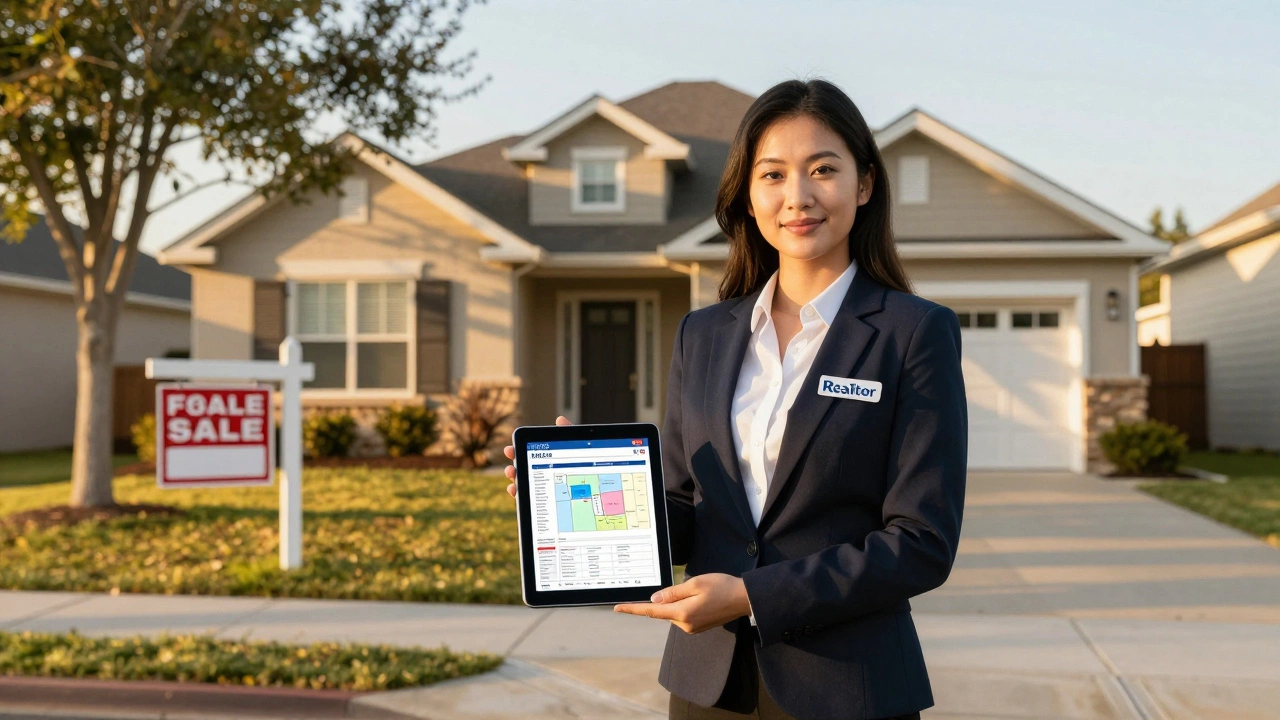
You’ve probably heard the word ‘Realtor’ thrown around like it’s the same as ‘real estate agent.’ It’s not. A Realtor is a real estate agent who belongs to the National Association of Realtors (NAR). That’s a professional organization with over 1.5 million members in the U.S. To become a Realtor, you need to be licensed, pay annual dues, and follow a strict Code of Ethics. That means Realtors are held to higher standards than regular agents-like being honest about property flaws or not pressuring clients into deals.
So every Realtor is a real estate agent, but not every real estate agent is a Realtor. If you’re looking for someone with extra accountability, ask if they’re a Realtor. You’ll see the word on their business card, website, or email signature. It’s a small badge-but it signals they’ve committed to professionalism, not just profit.
How Do They Get Paid?
Real estate agents don’t get a salary. They earn commissions. That means they only make money when a sale closes. The standard commission is 5% to 6% of the home’s sale price. That fee is usually split between the buyer’s agent and the seller’s agent. So if a house sells for $400,000, the total commission might be $20,000. Each agent gets about $10,000.
That sounds like a lot-but remember, agents pay for their own marketing, office fees, insurance, and sometimes even their own assistants. After taxes and expenses, many agents take home less than $50,000 a year. Top performers make six figures. But most work long hours, often weekends and evenings, just to close one deal. There’s no paycheck waiting every two weeks.

What’s the Seller’s Agent vs. Buyer’s Agent?
Not all agents work the same way. There are two main types:
- Seller’s agent: Works for the person selling the house. Their job is to get the highest possible price, market the home well, and screen serious buyers. They list the property on MLS, take professional photos, host open houses, and negotiate offers.
- Buyer’s agent: Works for the person buying the house. They help you find homes that match your needs, schedule showings, explain neighborhood details, and negotiate on your behalf. They’ll also point out red flags you might miss-like outdated wiring or a leaky roof.
In most cases, the seller pays both agents’ commissions. That means buyers don’t pay their agent directly. It’s built into the sale. So if you’re buying, you can-and should-hire your own agent. They’re on your side. Don’t assume the listing agent (the one showing you the house) is working for you. They’re paid by the seller.
Do You Need an Agent to Sell Your House?
You don’t legally need one. You can sell your house yourself-that’s called a ‘For Sale By Owner’ or FSBO. But here’s the truth: over 85% of homes in the U.S. are sold through agents. Why? Because agents have access to buyers you can’t reach. They know how to stage a home to get top dollar. They handle the legal paperwork so you don’t mess up a contract. And they negotiate better offers than most homeowners ever could.
According to the National Association of Realtors, FSBO homes sold for an average of $250,000 in 2025. Homes sold with an agent averaged $350,000. That’s a $100,000 difference. Even after paying commission, sellers made more money overall. That’s not luck. That’s expertise.

What Skills Make a Great Real Estate Agent?
It’s not just about being friendly or having a nice car. The best agents have a mix of hard and soft skills:
- Market knowledge: They know what homes are selling for in each street, not just the zip code.
- Communication: They respond quickly, explain terms clearly, and keep you updated-even on weekends.
- Problem-solving: A buyer’s inspection finds mold? The agent finds a reputable inspector and negotiates repairs or price drops.
- Local connections: They know which lenders work fast, which inspectors are thorough, and which contractors fix issues without overcharging.
They’re part counselor, part lawyer, part marketer, and part data analyst. And they do it all while juggling 10-20 clients at once.
How to Choose the Right Agent
Not all agents are equal. Here’s how to pick one who actually helps:
- Ask for recent sales data. A good agent will show you 5-10 homes they sold in the last 6 months-along with the final sale price vs. the original listing.
- Check if they specialize in your neighborhood. Selling a condo in downtown? Find someone who knows that market inside out.
- Interview at least three agents. Ask how they plan to market your home. If they say, ‘I’ll post it on Facebook,’ walk away.
- Look for a Realtor with a professional website and clear reviews. Avoid agents who only use WhatsApp or text messages.
- Ask about their team. Many top agents have assistants who handle scheduling, photos, and paperwork. That’s a good sign.
The right agent makes the whole process feel smooth. The wrong one turns it into a nightmare.
What’s Next If You Want to Become One?
If you’re thinking about becoming a real estate agent, here’s the reality:
- You need to complete 60-180 hours of pre-licensing education (varies by state).
- You must pass a state exam with 80-150 multiple-choice questions.
- You’ll need to work under a sponsoring broker for your first few years.
- Most new agents quit within the first year because they don’t make enough money early on.
It’s not a get-rich-quick job. But for people who like helping others, love real estate, and don’t mind hustle, it can be one of the most rewarding careers.
Can a real estate agent sell houses in any state?
No. Real estate licenses are state-specific. An agent licensed in Texas can’t legally sell homes in California without getting licensed there too. Some states have reciprocity agreements, meaning they recognize licenses from other states-but you still need to apply and sometimes take a state-specific exam. Always check with the real estate commission in the state where you want to work.
Do real estate agents help with rentals too?
Yes. Many agents work in both sales and rentals. They help landlords find tenants and help renters find apartments, condos, or houses. The process is different-rentals usually involve credit checks, income verification, and lease agreements-but the same agent can handle both. Just ask if they have rental experience before hiring them.
Is it better to work with a big agency or a solo agent?
It depends. Big agencies like Keller Williams or RE/MAX offer more marketing tools, training, and brand recognition. But they also take a bigger cut of your commission. Solo agents often have lower overhead and can pass savings to clients. They might also give you more personal attention. Look at their track record, not their logo. A solo agent with 50 sales last year is better than a big agency agent with 5.
Can I buy a house without an agent?
Yes, but it’s risky. You’ll have to find homes yourself, schedule showings, negotiate offers, and handle legal documents. Without an agent, you might miss out on homes that aren’t publicly listed. You also won’t have someone to catch mistakes in contracts. Most lenders and title companies prefer working with agents because they know the process. If you go solo, hire a real estate attorney to review everything.
What’s the difference between a real estate agent and a broker?
A broker has more education and licensing than an agent. Brokers can work independently and hire agents to work under them. Most agents work under a broker. If you see ‘Managing Broker’ on a sign, that person runs the office. You’ll still be working with an agent, but they’re supervised by the broker. Brokers often handle complex transactions or commercial properties.