
Cost of Living Comparison Tool
Your Current Monthly Expenses
Select a State to Compare
Mississippi
Cheapest overallOklahoma
Runner-upAlabama
Lowest property taxKansas
Central locationWest Virginia
Natural beautyComparison Results
Current Monthly Total
New Monthly Total
Breakdown by Category
Money doesn't just vanish; it gets spent. But where you spend it changes everything. If you are looking for the absolute lowest monthly bill for a life that still feels like life, one name keeps popping up in the data: Mississippi. It is not glamorous. It does not have the tech hubs of California or the coastal allure of Florida. But when you strip away the marketing and look at the raw numbers-housing, groceries, utilities, and taxes-Mississippi consistently sits at the bottom of the cost-of-living ladder.
However, "cheapest" is a tricky word. Does it mean the cheapest rent? The lowest property taxes? Or the state where your paycheck stretches the furthest after accounting for wages? The answer depends on whether you own a home, rent an apartment, or work remotely. Let’s break down the real costs, the hidden trade-offs, and why the #1 spot might not be what you expect.
The Data Behind the Crown: Why Mississippi Wins
To understand why Mississippi holds the title for the cheapest state to live in during 2026, we need to look at the components of the Consumer Price Index (CPI). The CPI measures the average change over time in the prices paid by urban consumers for a market basket of consumer goods and services.
Mississippi’s overall cost of living index typically hovers around 85-87, compared to the national average of 100. This means goods and services are roughly 13-15% cheaper than in most other parts of the country. Here is how that breaks down:
- Housing: This is the biggest factor. The median home price in Mississippi often stays below $200,000, significantly lower than the national median which has climbed past $400,000 in recent years. Renters also benefit, with median rents frequently sitting under $900 per month for a two-bedroom unit outside major metros.
- Property Taxes: Mississippi has some of the lowest effective property tax rates in the nation, often averaging less than 0.8%. In contrast, states like New Jersey or Illinois can exceed 2%.
- Groceries and Utilities: While these vary less by state, Southern states generally benefit from lower transportation costs for food distribution and milder winters that reduce heating bills.
But here is the catch: low costs often correlate with lower wages. Mississippi also frequently ranks near the bottom for median household income. So, while things are cheap, people also earn less. For remote workers earning national salaries, this creates a massive purchasing power advantage. For locals working local jobs, the savings may be offset by lower paychecks.
The Contenders: Other Low-Cost States Worth Considering
If Mississippi feels too far off the beaten path, or if you prefer different weather or culture, several other states offer remarkably affordable living conditions. These states often rank in the top five for affordability but come with their own unique pros and cons.
| State | Median Home Price | Avg. Monthly Rent (2BR) | Effective Property Tax Rate | Key Trade-off |
|---|---|---|---|---|
| Mississippi | $190,000 | $850 | 0.8% | Lower job market diversity; humid summers |
| Oklahoma | $185,000 | $920 | 0.9% | Tornado risk; limited public transit |
| Alabama | $210,000 | $950 | 0.4% | High humidity; slower economic growth |
| Kansas | $230,000 | $1,000 | 1.4% | Harsh winters; flat landscape |
| West Virginia | $175,000 | $800 | 0.6% | Declining population; limited healthcare access in rural areas |
Oklahoma is a strong runner-up. It offers similar housing costs to Mississippi but with slightly more diverse industry sectors, including energy and aviation. However, the weather can be extreme, with severe thunderstorms and tornadoes being a genuine concern.
Alabama provides extremely low property taxes, making it attractive for homeowners who plan to stay long-term. Cities like Huntsville have seen tech growth, offering better job prospects than the state average, though housing there is pricier than in smaller towns.
Kansas appeals to those who want central US location benefits without the high costs of neighboring Colorado or Nebraska. Wichita and Kansas City suburbs offer affordable entry points into stable economies.
West Virginia is often overlooked but offers stunning natural beauty and very low costs. The downside is infrastructure challenges and a shrinking population in many counties, which can affect community services and resale value.
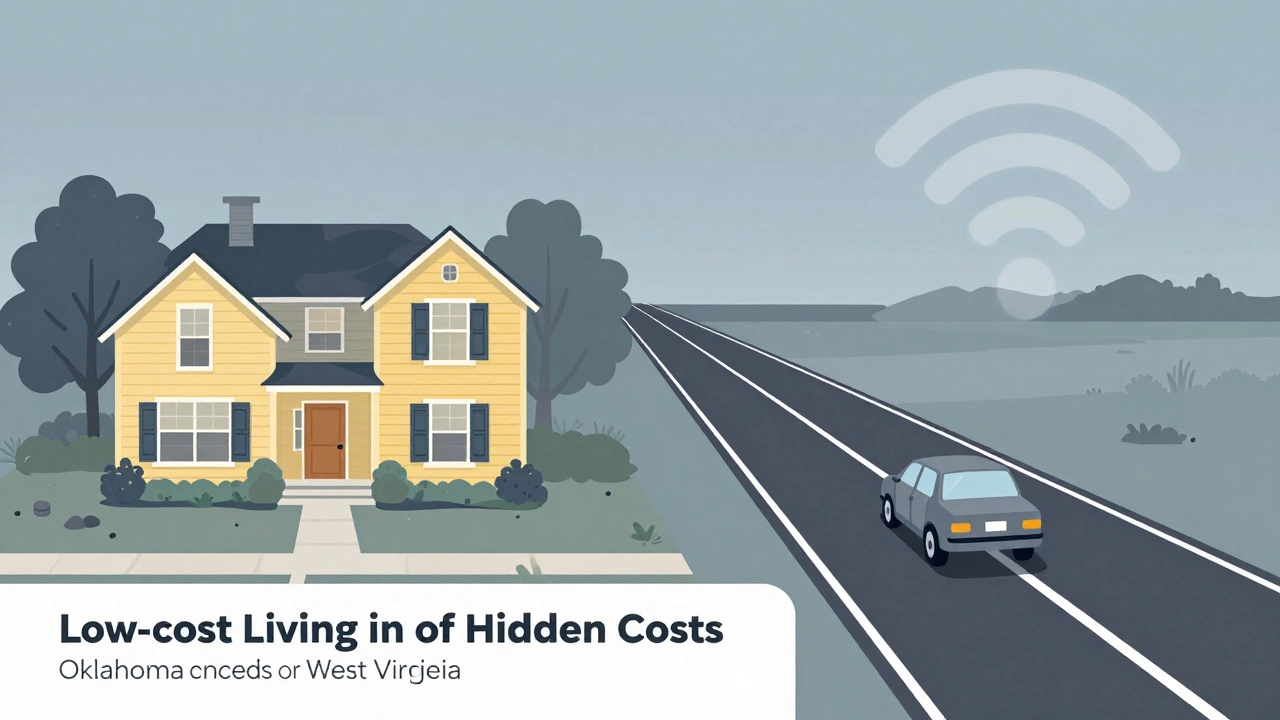
Hidden Costs: What the Numbers Don’t Show You
When calculating the true cost of living, you must look beyond rent and mortgage payments. Several hidden factors can erode your savings in cheap states.
1. Transportation Costs
Cheap states are often less densely populated. This means fewer public transportation options. If you do not own a car, your quality of life drops significantly. You will likely spend more on gas, maintenance, and insurance due to longer commutes. In rural Mississippi or West Virginia, driving 20 miles for groceries or medical appointments is common.
2. Healthcare Access
Medical care varies wildly by region. Rural areas in affordable states often face hospital closures and doctor shortages. While routine care might be cheaper, specialized treatment may require traveling hours to a major city, adding travel and lodging costs to your medical bills.
3. Internet and Connectivity
For remote workers, reliable high-speed internet is non-negotiable. Many rural parts of Mississippi, Alabama, and West Virginia still struggle with broadband infrastructure. You might find yourself paying premium prices for satellite internet or dealing with slow DSL connections, which undermines the benefit of a remote salary.
4. Sales Tax
States with no income tax (like Texas or Florida) are popular, but they make up for it with higher sales taxes. Mississippi has a combined state and local sales tax that can exceed 7%. When you buy groceries, clothes, and electronics, these small percentages add up over a year. Always calculate the total tax burden, not just property or income tax.
Who Should Move to the Cheapest States?
Moving to a low-cost state is not a one-size-fits-all solution. Your personal situation dictates whether the savings are real or illusory.
Remote Workers: If you earn a San Francisco or New York salary but live in Jackson, MS, you win. Your purchasing power skyrockets. You can afford a larger house, save more, and enjoy a relaxed lifestyle. Just ensure your employer allows relocation and that your internet connection is robust.
Retirees: Fixed incomes stretch further in states with low property taxes and no inheritance tax. Mississippi and Alabama offer warm climates and lower daily expenses. However, verify proximity to quality healthcare facilities before committing.
Families on Tight Budgets: Young families struggling with housing costs in expensive states may find relief in Oklahoma or Kansas. The ability to buy a single-family home with a yard instead of renting a cramped apartment can improve mental health and stability.
Not For Everyone: If your career depends on networking, in-person meetings, or specific industries like finance or tech, moving to a low-cost state might hurt your professional growth. The lack of major metropolitan hubs can limit job opportunities and career advancement.

How to Calculate Your Personal Cost of Living
Do not rely solely on state averages. Use a personalized approach to estimate your new budget.
- List Your Monthly Expenses: Include housing, utilities, groceries, transportation, insurance, entertainment, and debt payments.
- Adjust for Location: Use online cost-of-living calculators (like NerdWallet or Bankrate) to compare your current city with your target city. Input your specific zip codes for accuracy.
- Factor in Moving Costs: Relocation expenses, temporary housing, and potential loss of income during the transition can add thousands to your initial outlay.
- Test Drive: Before selling your home, rent in the target area for 1-3 months. Experience the climate, commute, and community firsthand. Online research cannot replace lived experience.
- Check Job Markets:** Even if you are remote, consider backup plans. Research local employment trends and unemployment rates in the county, not just the state.
Final Thoughts on Affordability
Mississippi remains the statistical winner for the cheapest state to live in. But affordability is subjective. A place is only truly cheap if it meets your needs without sacrificing your well-being. Consider your priorities: Do you value low taxes over job diversity? Are you willing to trade mild winters for lower housing costs? By aligning your financial goals with your lifestyle preferences, you can find a home that lets you keep more of what you earn.
Is Mississippi really the cheapest state to live in?
Yes, based on comprehensive cost-of-living indices that include housing, groceries, utilities, and transportation, Mississippi consistently ranks as the most affordable state in the U.S. Its low housing costs and minimal property taxes drive this ranking.
What are the downsides of living in Mississippi?
The main downsides include lower average wages, limited job diversity outside specific sectors, hot and humid summers, and potentially weaker infrastructure in rural areas such as broadband internet and public transportation.
Which state has the lowest property taxes?
Hawaii and Alabama often compete for the lowest effective property tax rates. Alabama’s rate is approximately 0.4%, while Mississippi’s is around 0.8%. Both are significantly lower than the national average.
Can I retire comfortably on a fixed income in Oklahoma?
Yes, Oklahoma is highly suitable for retirees on fixed incomes. It offers affordable housing, low property taxes, and a moderate climate. Cities like Tulsa and Oklahoma City provide good healthcare access and cultural amenities.
Does a low cost of living mean lower quality of life?
Not necessarily. Quality of life is subjective. While cheap states may lack certain urban amenities, they often offer stronger community ties, less traffic, and access to nature. The key is ensuring your specific needs-like healthcare and internet-are met.