Bedroom Legality Visualizer
Enter the dimensions of the room you are evaluating. This tool uses standard US International Residential Code (IRC) guidelines as a baseline.
Compliance Check
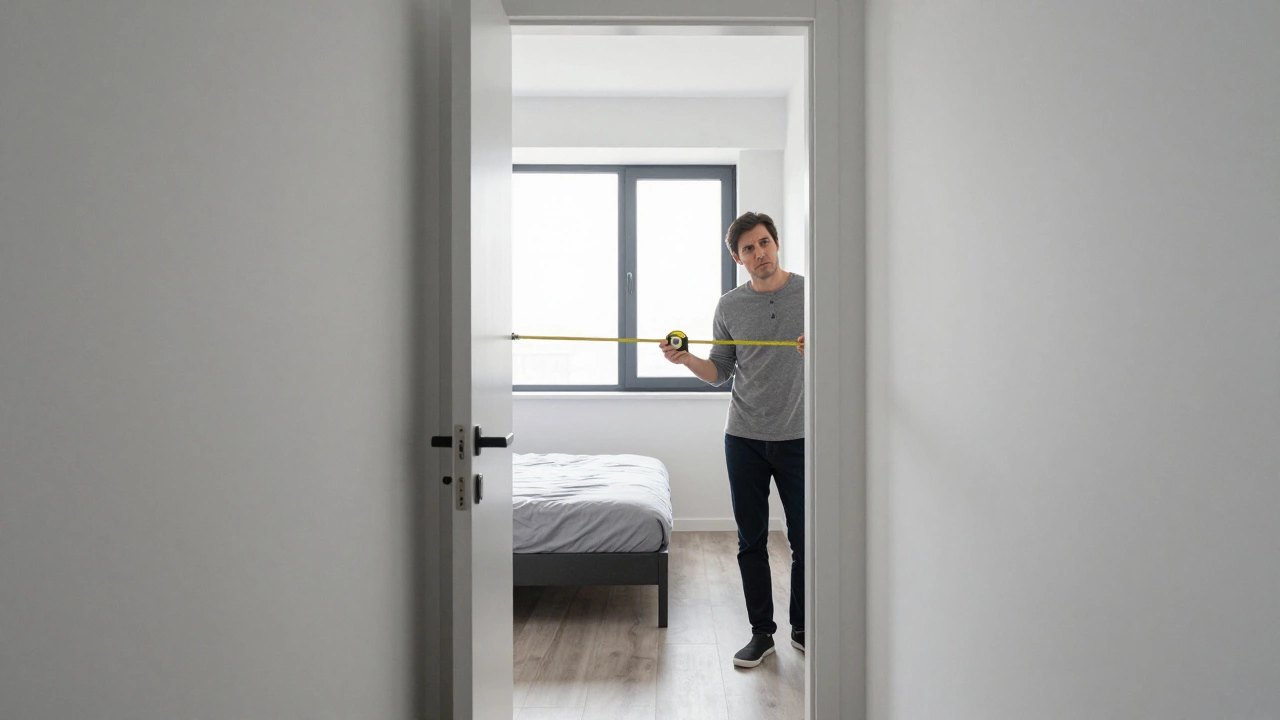
Imagine walking into a sleek 2BHK apartment that looks perfect on paper. The layout is open, the finishes are modern, and the price fits your budget. But then you step into the second bedroom. It feels tight. Too tight. You pull out a tape measure, and the numbers don't add up to a comfortable living space. Is it legal? Can you even call it a bedroom?
This is the exact dilemma thousands of renters and buyers face every year. In the world of real estate, "bedroom" isn't just a label; it's a legal classification with strict requirements. If a room doesn't meet specific size standards, it might not be a bedroom at all-it could be a den, a study, or worse, an illegal conversion. For anyone looking at 2BHK apartments, understanding these minimums is crucial before signing a lease or closing on a purchase.
The Golden Rule: Minimum Square Footage
When we talk about the smallest legal size for a bedroom, we are usually referring to two main metrics: total floor area and linear dimensions. While laws vary significantly by country and even by city, there are widely accepted industry standards that most building codes follow.
In many jurisdictions, including large parts of the United States under the International Residential Code (IRC), the absolute minimum floor area for a habitable bedroom is 70 square feet. This applies to rooms occupied by one person. If the room is intended for two occupants, the minimum jumps to 50 square feet per person, meaning a shared bedroom must be at least 100 square feet.
However, square footage alone can be misleading. A room that is 70 square feet but shaped like a narrow hallway is not functional. That’s why codes also mandate minimum linear dimensions. Typically, no side of the room can be less than 7 feet in width. So, a room measuring 7 feet by 10 feet (70 sq ft) meets the basic criteria, but a room that is 5 feet by 14 feet does not, even though the area is the same.
Why Ceiling Height Matters More Than You Think
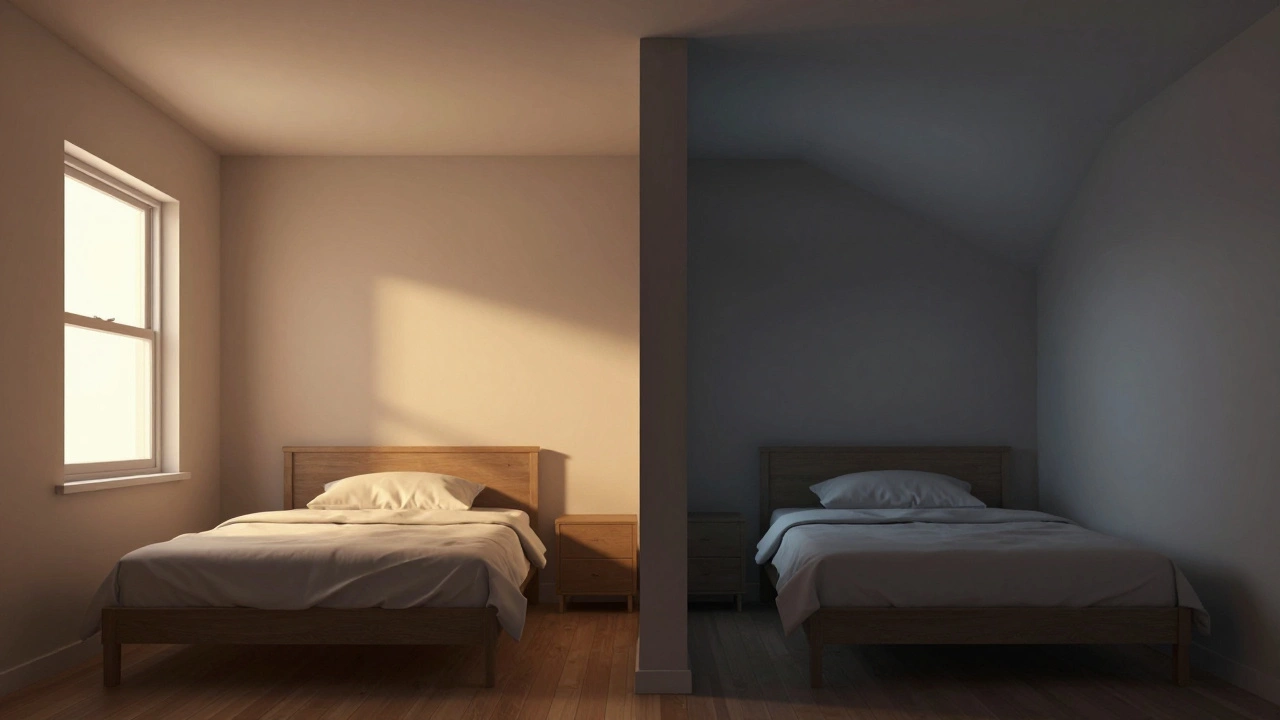
You might have a room that hits the 70-square-foot mark, but if the ceiling slopes down sharply, it might not count as a bedroom. Building codes generally require a minimum ceiling height of 7 feet over at least 50% of the floor area. Any portion of the room with a ceiling lower than 5 feet cannot be counted toward the minimum floor area requirement.
This is particularly relevant in attic conversions or lofts within 2BHK apartments. If you’re looking at a unit with slanted ceilings, grab a tape measure. If more than half the floor space has a ceiling below 7 feet, that room likely fails the legal definition of a bedroom, regardless of how cozy it looks.
Escape Routes: The Window Requirement
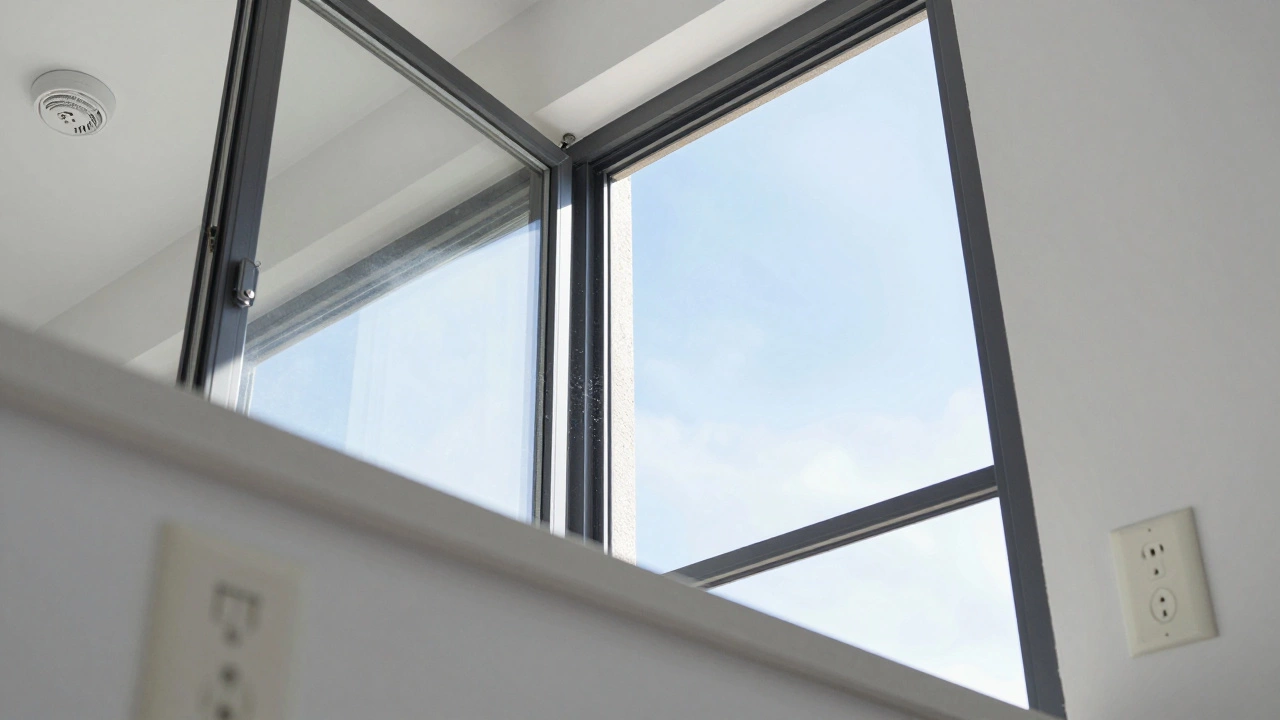
A bedroom is not just a place to sleep; it is a safety zone. In the event of a fire, occupants need a way out besides the door. This is where the concept of egress comes in. Every legal bedroom must have at least one window or exterior door that serves as an emergency escape and rescue opening.
This window cannot be just any window. It must meet specific size requirements to allow a person to climb out and firefighters to climb in. Under the IRC, the minimum net clear opening for such a window is typically 5.7 square feet (with a minimum height of 24 inches and width of 20 inches). For ground-floor bedrooms, this is standard. For upper-story bedrooms, the sill height should not exceed 44 inches above the floor to ensure easy exit.
If a room in your potential 2BHK apartment lacks a window of this size, or if the window opens inward and gets blocked by furniture, it may not be legally classified as a bedroom. This is a common issue in older buildings where interior closets were converted into small guest rooms without proper ventilation or egress.
Storage Space: The Closet Myth
Here is a tricky one: Does a bedroom need a closet? Surprisingly, most national and international building codes do not explicitly require a closet for a room to be classified as a bedroom. However, local municipal codes or specific state regulations might. More importantly, the real estate market often demands it.
While you might find a legal bedroom without a closet, appraisers and lenders often look for built-in storage when determining the value and livability of a home. In the context of 2BHK apartments, especially in competitive urban markets, a "bedroom" without storage is often marketed as a "study" or "flex room" to avoid misrepresentation. Always check your local city ordinances, as some places, like certain counties in California or New York, have stricter definitions that include storage requirements.
Heating, Cooling, and Electrical Safety
A room must be habitable, which means it needs to maintain a comfortable temperature. Building codes require that every bedroom has access to heating and cooling systems capable of maintaining temperatures between 68°F and 75°F (20°C - 24°C). This doesn’t mean the thermostat must be inside the room, but the HVAC system must effectively reach it.
Electrical safety is another non-negotiable factor. Each bedroom must have at least one permanently installed lighting fixture and at least one wall outlet. These outlets must be spaced so that no point along the floor line is more than 6 feet from an outlet. Additionally, smoke detectors are mandatory. In multi-unit dwellings like apartments, interconnected smoke alarms are often required by law to ensure early warning throughout the unit.
Regional Variations: Australia vs. The Rest of the World
Since I’m writing this from Melbourne, it’s worth noting how these rules differ globally. In Australia, the National Construction Code (NCC) sets the standards. For a room to be considered a bedroom in an Australian dwelling, it generally needs a minimum floor area of 8 square meters (approximately 86 square feet) for a single occupant. This is slightly larger than the US standard. Furthermore, Australian codes emphasize natural light and ventilation more heavily, often requiring windows to comprise a certain percentage of the floor area.
If you are comparing listings internationally, keep these differences in mind. A "small" bedroom in Sydney might feel spacious in Chicago, and vice versa. When evaluating a 2BHK apartment, always refer to the local building code rather than general internet advice.
| Requirement | US (IRC Standard) | Australia (NCC) | UK (Building Regs) |
|---|---|---|---|
| Min Floor Area (1 person) | 70 sq ft (6.5 m²) | 8 m² (86 sq ft) | No fixed min, but guidance suggests ~7-8 m² |
| Min Linear Dimension | 7 feet (2.1 m) | Varies by council, often 2.1m | Not strictly defined, depends on use |
| Ceiling Height | 7 feet (2.1 m) | 2.4 m (approx 7.9 ft) | 2.3 m (approx 7.5 ft) |
| Egress Window | Required (5.7 sq ft opening) | Required for ventilation/escape | Required for escape routes |
Red Flags When Viewing a 2BHK Apartment
Armed with this knowledge, how do you spot a fake bedroom during a viewing? Here is a practical checklist:
- Measure the Width: Stand in the doorway. If you can’t comfortably walk past someone else, the room is likely under 7 feet wide. Use your arm span (roughly 6-7 feet for adults) as a quick gauge.
- Check the Window Operation: Open the window. Does it go up and out? Does it get stuck behind a radiator or AC unit? If the clear opening is smaller than a standard sheet of plywood, it’s a red flag.
- Look for Smoke Detectors: Is there a hardwired smoke alarm on the ceiling? Landlords sometimes omit these in non-conforming rooms to avoid liability.
- Ask About Permits: If the bedroom seems oddly placed or was recently added, ask if permits were pulled. Unpermitted renovations are a major risk in property buying.
Impact on Property Value and Insurance
Misclassifying a room can have financial consequences. If you buy a 2BHK apartment thinking it has two bedrooms, but one is legally a den, your appraisal value will drop. Lenders base loans on comparable sales, and a 2-bedroom unit sells for significantly more than a 1-bedroom-plus-study unit.
Insurance is another angle. Homeowners and renters insurance policies cover personal property based on the structure's classification. If a fire occurs and the insurer discovers unpermitted or non-compliant rooms, they might deny the claim, arguing that the property was misrepresented. Always verify compliance before moving in.
Next Steps for Buyers and Renters
If you’ve found a dream 2BHK apartment but are unsure about the room sizes, take these steps:
- Request the Floor Plan: Most legitimate listings provide detailed blueprints with dimensions. Look for rooms marked as "BR" (Bedroom) versus "Den" or "Office."
- Hire a Home Inspector: During the inspection phase, specifically ask the inspector to verify bedroom egress and ceiling heights. They carry laser measures and know the local codes.
- Consult Local Authorities: If you suspect a violation, you can often request a copy of the certificate of occupancy from your city’s building department. This document lists the legal number of bedrooms.
Understanding these details protects you from costly mistakes. A bedroom is more than just a place to put a bed; it’s a regulated living space designed for safety and comfort. Don’t let a clever listing fool you-measure twice, sign once.
What is the absolute minimum size for a bedroom?
In many regions following the International Residential Code, the minimum size is 70 square feet with no dimension less than 7 feet. However, local laws may vary, so always check your specific city or state regulations.
Does a bedroom need a closet?
Most national building codes do not require a closet for a room to be a bedroom. However, some local municipalities do, and real estate market norms often expect one. Check your local ordinances.
Can a basement room be a legal bedroom?
Yes, provided it meets all other requirements: minimum ceiling height (usually 7 feet), adequate square footage, proper egress (a window large enough for escape), and heating/cooling. Egress is the most common hurdle for basement bedrooms.
How do I verify if a room is a legal bedroom?
You can request the Certificate of Occupancy from your local building department, which lists the legal bedroom count. Alternatively, hire a professional home inspector to measure dimensions and check for egress compliance.
What happens if I rent a room that isn't a legal bedroom?
If a landlord misrepresents a room as a bedroom, you may have grounds for legal action or rent reduction depending on local tenant laws. It can also affect your insurance coverage and resale value if you are buying.