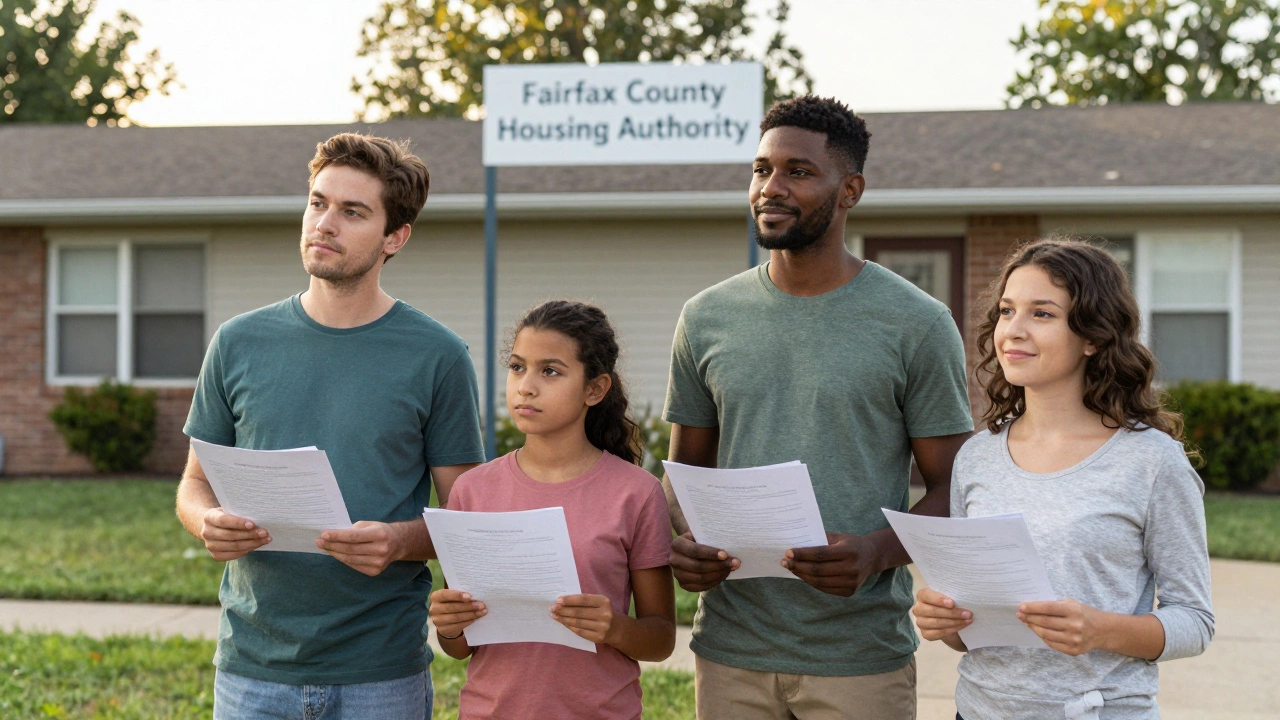
Affordable Housing Eligibility Calculator
Check Your Eligibility
Determine if you qualify for affordable housing programs in Fairfax County based on your household size and income.
Eligibility Results
If you’re struggling to pay rent in Fairfax County, you’re not alone. Housing costs have climbed faster than wages, and many families are one missed paycheck away from eviction. But affordable housing programs exist - if you know who qualifies and how to apply. This isn’t about luxury apartments or waiting lists that never move. It’s about real, government-backed options that help people with low and moderate incomes find safe, stable homes.
Income Limits Are the First Rule
To qualify for most affordable housing programs in Fairfax County, your household income must fall below a set percentage of the Area Median Income (AMI). For 2026, the AMI for a family of four is $135,000. That doesn’t mean you need to make less than that to qualify - it means you need to make significantly less.
Most programs target households earning 30% to 80% of AMI. For example:
- At 30% of AMI: A family of four can earn up to $40,500 per year.
- At 50% of AMI: A family of four can earn up to $67,500 per year.
- At 80% of AMI: A family of four can earn up to $108,000 per year.
These numbers change slightly every year based on federal guidelines. If you work as a home health aide, a school bus driver, a grocery clerk, or a custodian, you’re likely within range. If you’re a teacher, nurse, or police officer in Fairfax, you might still qualify - especially if you have children or high medical bills.
Household Size Matters
The more people in your household, the higher the income limit. A single person can qualify with a much lower income than a family of five. That’s because housing costs scale with size, and the government adjusts limits to reflect that.
For a single person in 2026:
- 30% AMI: Up to $24,000/year
- 50% AMI: Up to $40,000/year
- 80% AMI: Up to $64,000/year
Don’t assume you’re too high-earning just because you make $50,000. If you’re supporting two kids, paying for childcare, or dealing with medical expenses, you may still be eligible. Programs look at your total household income - not just your paycheck.
Citizenship and Immigration Status
You don’t need to be a U.S. citizen to qualify for affordable housing in Fairfax County. Federal law allows legal immigrants with documented status - including green card holders, refugees, asylees, and people with temporary protected status - to apply.
However, undocumented immigrants are not eligible for publicly funded housing programs. That doesn’t mean they have no options. Some nonprofit organizations and faith-based groups offer emergency housing assistance or rent subsidies, even if they can’t access Section 8 or public housing.
If you’re unsure about your immigration status, contact the Fairfax County Department of Housing and Community Development. They have staff who can help you understand your options without asking for documents you don’t have.
Other Eligibility Factors
Income isn’t the only thing that matters. Here are a few other rules that can affect your application:
- Criminal history: A felony conviction doesn’t automatically disqualify you. Programs review the type of crime, when it happened, and whether you’ve completed rehabilitation. Violent crimes or sex offenses are usually automatic disqualifiers. Nonviolent offenses, like drug possession or theft, are reviewed case by case.
- Previous eviction: If you were evicted for nonpayment of rent, you may still qualify - especially if you’ve since stabilized your income. But if you were evicted for damaging property or illegal activity, you’ll likely be denied.
- Current housing: You can’t already own a home or have access to other safe, affordable housing. If you’re living with family or in a shelter, you’re still eligible.
- Disability: People with disabilities often get priority in certain programs. If you receive SSI or SSDI, your income is counted differently, and you may qualify even if you’re slightly over the limit.
Types of Affordable Housing Programs
Not all affordable housing is the same. Fairfax County offers several pathways:
- Section 8 Housing Choice Vouchers: You get a voucher to pay part of your rent in a private apartment. You choose where to live, as long as the landlord accepts vouchers. The county pays the difference between 30% of your income and the rent.
- Public Housing: Apartments owned and managed by the Fairfax County Housing Authority. Rent is based on your income. Waiting lists are long - sometimes years - but they never close.
- Low-Income Housing Tax Credit (LIHTC) Properties: Private developers build or renovate buildings with government tax breaks. In return, they set aside units for low-income renters. These are often newer buildings with better amenities.
- Project-Based Vouchers: Similar to Section 8, but the voucher is tied to a specific building. If you move out, you lose the subsidy unless you transfer to another program.
Most people start with Section 8. It gives you the most freedom. But if you need immediate help, project-based housing or public housing might be faster - if you’re on the waiting list.
How to Apply
You can’t walk into an office and get housing on the spot. Applications are processed through the Fairfax County Housing Authority. Here’s how to start:
- Visit fairfaxcounty.gov/housing to check current openings and waiting list status.
- Apply for the Housing Choice Voucher Program - this is the most common path.
- Wait for your name to reach the top of the list. You’ll get a letter by mail - not a phone call.
- Once selected, you’ll have 60 days to find a qualifying apartment.
- Pass a background check and provide proof of income, immigration status, and household composition.
Waiting lists open only occasionally - sometimes once every 1-3 years. Sign up as soon as one opens. Many people miss out because they wait too long.
What If You’re Denied?
Denials happen. Maybe your income was misreported. Maybe you missed a document. Maybe your criminal record was flagged. You have the right to appeal.
Request a hearing within 10 days of getting the denial letter. Bring pay stubs, tax returns, letters from employers, or medical records. Sometimes, a simple correction - like adding a child to your household - flips the decision.
If you’re turned down for Section 8, ask about other programs. Some nonprofits like Project Homeless Connect or FAIRFAX Housing Initiative offer short-term rent help, utility assistance, or transitional housing.
Common Mistakes to Avoid
People get denied not because they’re ineligible - but because they make avoidable errors:
- Not listing all household members - including children, elderly parents, or disabled siblings.
- Using outdated income numbers - use your most recent pay stubs, not last year’s tax return.
- Applying for the wrong program - Section 8 isn’t the same as public housing.
- Missing deadlines - if you’re called for an interview and don’t respond, you’re removed from the list.
- Not checking your mail - notices go out by postal mail, not email or text.
Write down your application number. Keep copies of everything you submit. Call the housing authority every 30 days to confirm your status.
What Happens After You Get Approved?
Getting approved is just the start. You’ll need to find a landlord who accepts vouchers. Some landlords refuse Section 8 because they think the inspections are too strict or payments are slow. That’s changing. More landlords are joining the program because the county guarantees payment.
Once you sign a lease, your rent will be capped at 30% of your monthly income. The rest is paid directly to the landlord by the housing authority. You’ll still pay for utilities unless the unit is included.
You’ll also need to recertify your income every year. If your salary goes up, your rent might increase - but never more than 30% of your new income. You won’t be kicked out just because you got a raise.
Next Steps
If you think you qualify, don’t wait. The system moves slowly, but it works for those who show up.
- Go to fairfaxcounty.gov/housing and download the application.
- Call the Housing Authority at 703-324-1400 if you need help filling it out.
- Visit a local library or community center - they have free computers and staff who can help you apply.
- Join the waiting list even if you’re not sure you qualify. You can always withdraw later.
There’s no shame in needing help. Thousands of working families in Fairfax County rely on these programs. You’re not asking for a handout - you’re asking for a fair shot at a place to call home.
Can I apply for affordable housing if I’m unemployed?
Yes. If you’re unemployed, your income is counted as $0. You still need to prove you’re actively seeking work or have other qualifying reasons, like disability, caregiving, or being a full-time student. The housing authority will ask for documentation, but unemployment doesn’t automatically disqualify you.
How long is the waiting list for Section 8 in Fairfax County?
As of 2026, the waiting list for Section 8 vouchers is closed. It last opened in early 2024 and received over 15,000 applications. The next opening date is not announced, but it typically happens every 2-3 years. Sign up for email alerts on the Fairfax County Housing Authority website to be notified when it reopens.
Do I need good credit to get affordable housing?
No. Credit scores are not used to determine eligibility for public housing or Section 8. The housing authority checks for recent evictions, criminal history, or fraud - not your FICO score. However, if you’re applying for a private LIHTC unit, the landlord might check your credit. That’s rare, and they usually only care if you’ve bounced checks or have unpaid rent.
Can I apply if I have student loans or medical debt?
Yes. Student loans and medical debt don’t count as income, and they don’t affect your eligibility. The housing authority only looks at your gross monthly income before taxes and deductions. Your debts are not considered when calculating whether you qualify.
What if my income goes up after I get housing?
You won’t be kicked out. Your rent will adjust annually based on your updated income, but it will never exceed 30% of what you earn. Many people get raises and stay in affordable housing for years. The program is designed to help people move up, not trap them.
Don’t give up. Affordable housing isn’t easy to get - but it’s possible. Thousands of people in Fairfax County are living in safe homes because they applied, followed up, and didn’t give up. You can be one of them.